Sandra's Story - Havana, Cuba (1955 to 1960)
Havana, Cuba (1955 to 1960)
Ochenta y Ocho
On our family’s arrival in Cuba in October 1955, we took up temporary quarters at an apartment building called simply “Ochenta y Ocho” (88, the address of the street where it was situated) in downtown Havana.
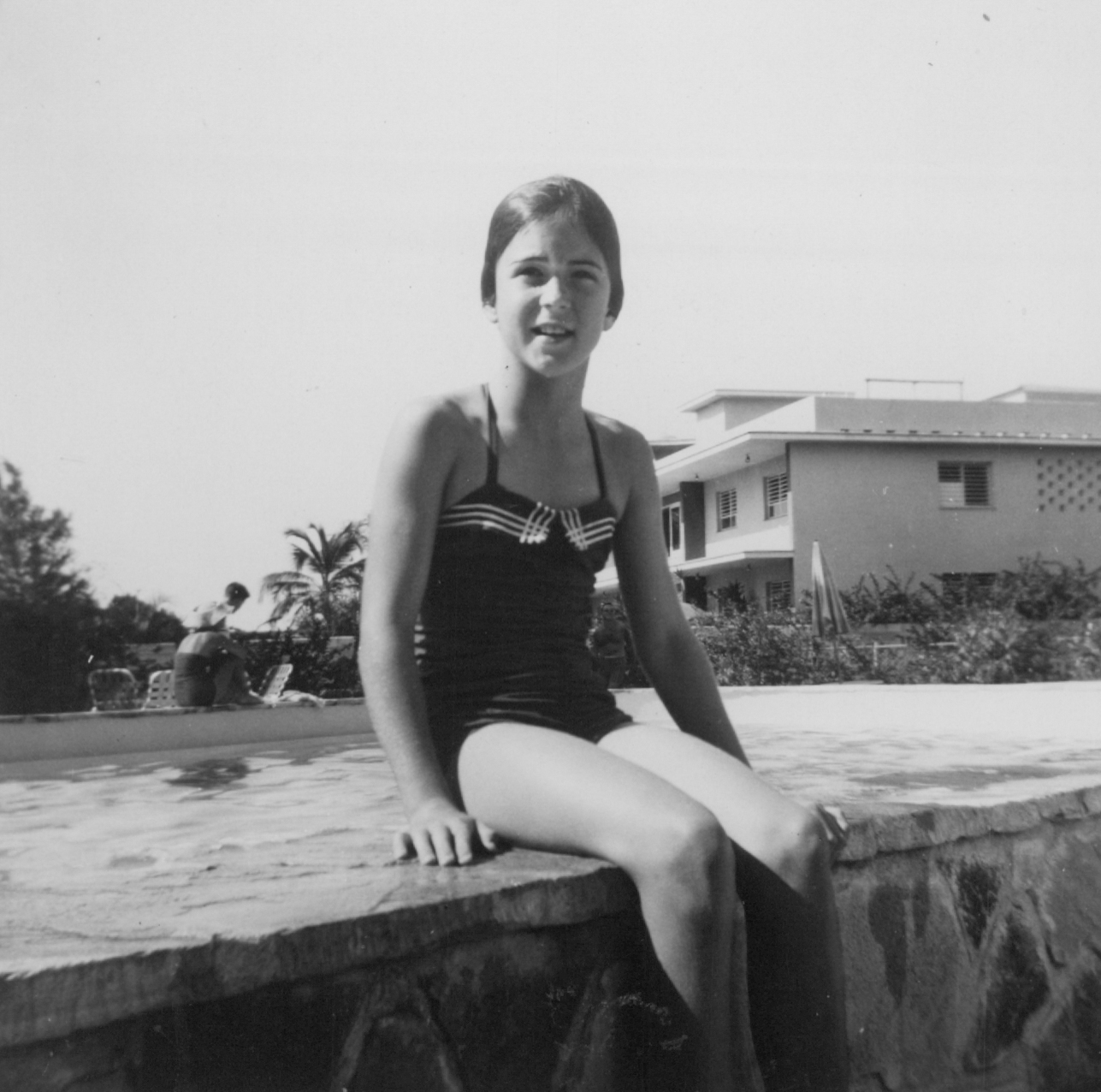
We were happy at the apartment building. It had an outdoor swimming pool that we used often. Below is a photo of Sandra at the pool outside the apartment building.
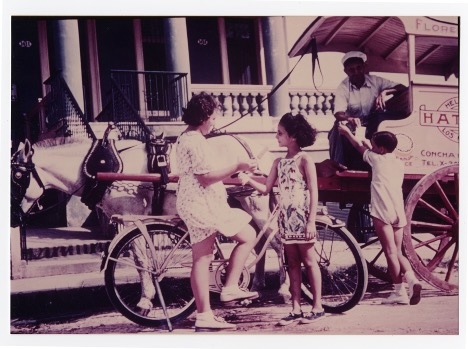
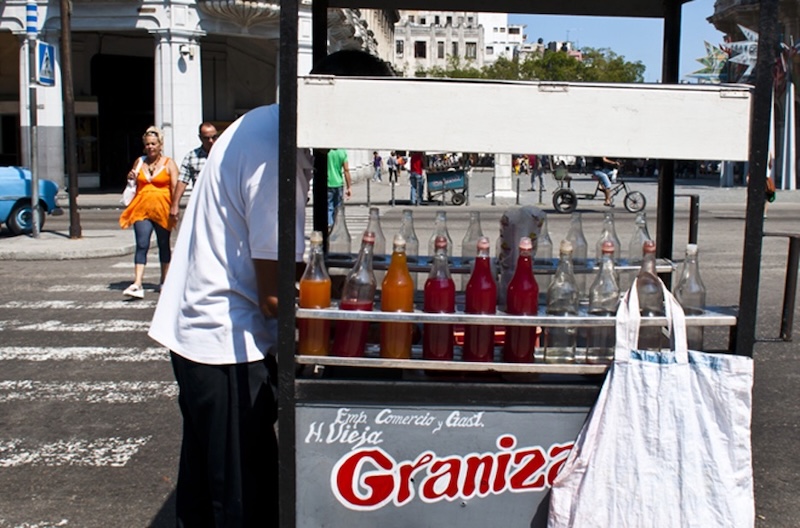
One of the highlights of our days was the daily visit of the snow-cone vendor. He arrived in a horse drawn cart, with a block of ice in the back from which he would make the “granizados” or snow cones. He had five bottles of flavored syrup from which we could choose. He would get out of the cart and go to the block of ice in the back of his wagon, where he used a tool that looked like a cheese cutter with a sharp edge over a slot to scrape the ice. When the ice shavings emerged from the slot, he would insert them into a cone-shaped cup and pour syrup over the ice. For Sandra, a thrilling memory was when the old man would let her share the seat on the buckboard and old the reins of his patient horse.

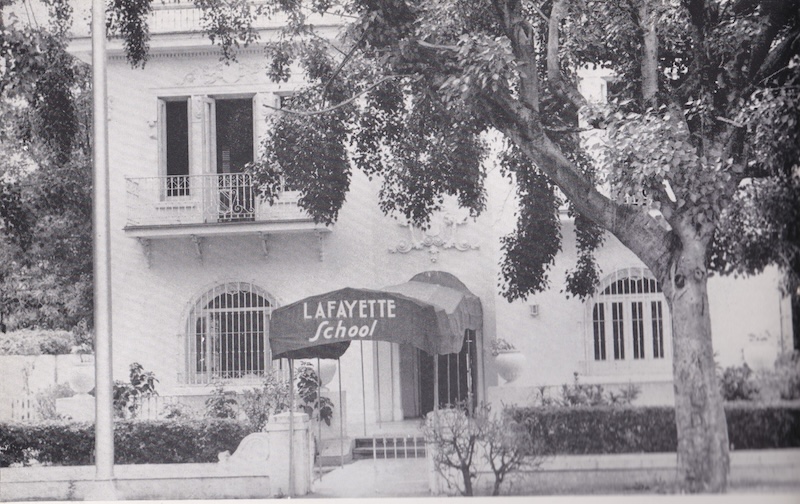
Sandra and David disliked Lafayette. David was terrified, at the age of 7, to be left in a school in a weathered old colonial building in the unfamiliar city, where most of the staff and students spoke Spanish, where some of the students were tough, and the staff seemed harsh, where we rode to and from school in an old school bus that smelled of diesel fuel, and where we were required to wear uniforms (drab two-toned brown).
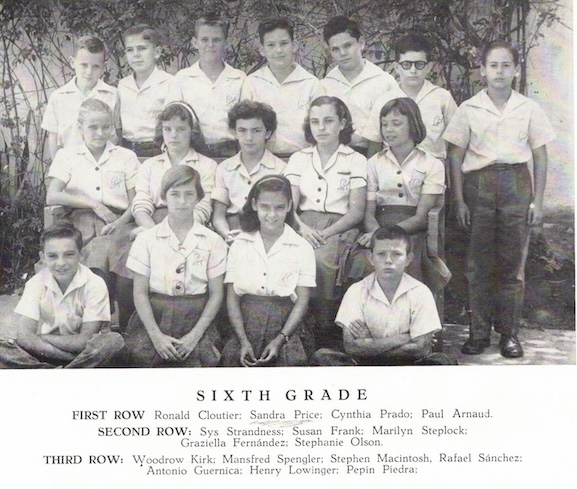
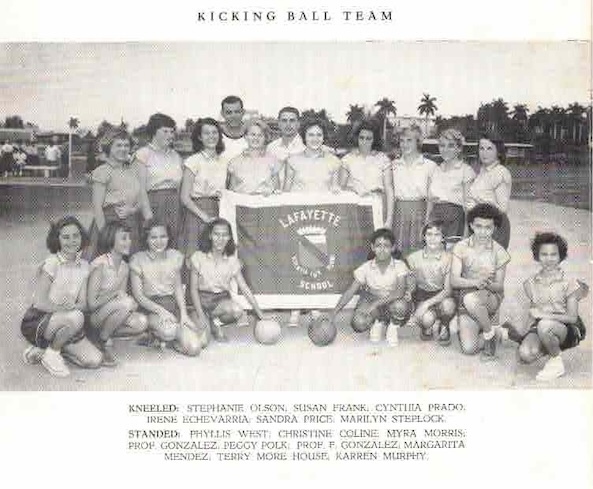
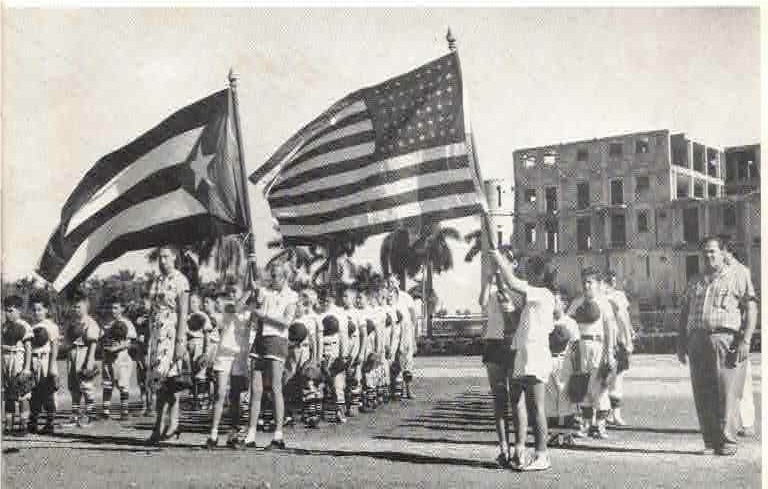
Sandra was on the kickball team at LaFayette, and the team sometimes competed on the Ruston field. The second photo below was taken on the Ruston field. Behind is a “castle” that rumour had it was being built by a wealthy man who ran out of money mid-way through the construction. Whenever he would acquire more funds, he would add to his castle, until one day, he was murdered with an ice-pick
The Pardo house in Biltmore
Within a year after our arrival in Cuba, our family moved from Ochenta y Ocho to a home that my parents rented at 19401 7th Avenue in the Biltmore/Country Club district in the northwest suburb of Havana.
It was a large four-bedroom Spanish colonial house at the corner of 7th Avenue at 194th Street. The district derived its name from the Biltmore Yacht Club, which was situated on the far side of the golf course which lay just behind the British Embassy residence, immediately across 7th Avenue from our home.
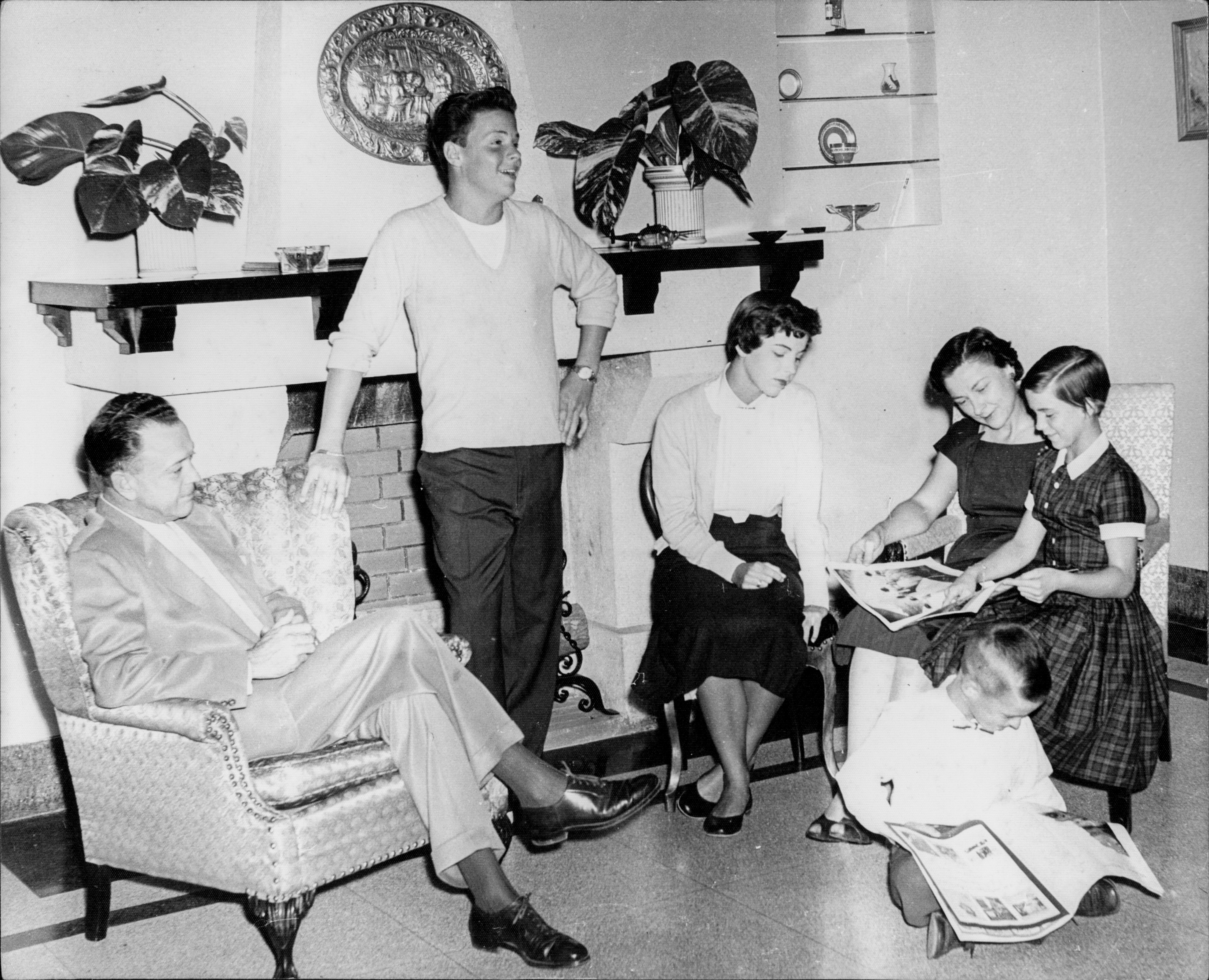
My parents had a formal family portrait taken of us in the living room of our new home.
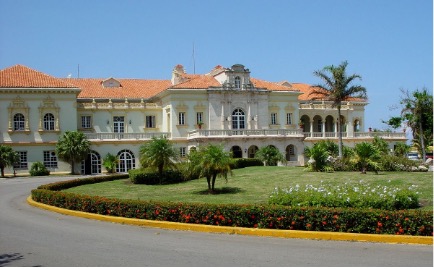
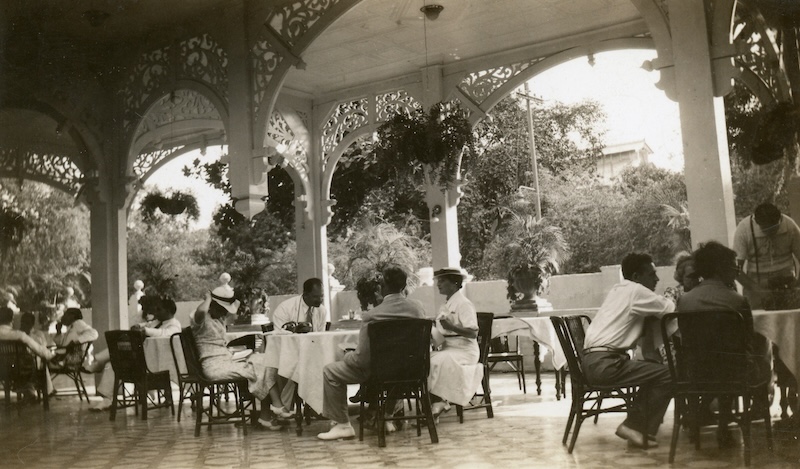
The Biltmore Yacht Club was located on 5th Avenue, between 188th and 192nd Street, also in the district (Reparto) of Biltmore/Country Club. Sandra loved the patio overlooking the beach and ocean, where we could sit at one of the tables, eat a “Cubano” (a ham or roasted pork, Swiss cheese, pickles, mustard, and Cuban bread), and crisp thin plaintain chips, drink Coke, and play “cubiletes” with five dice that we shook from a thick leather cup the shape of a large cocktail tumbler. The Biltmore Club, pictured below, was often our preferred place to be.
The interior of the Pardo house was as imposing as the exterior. It had a double marble staircase which led from the marble floor of the main hallway to the right, to the bedroom that Sandra occupied in 1958, after Pat’s departure for college, and to the left, to the bedroom David occupied.
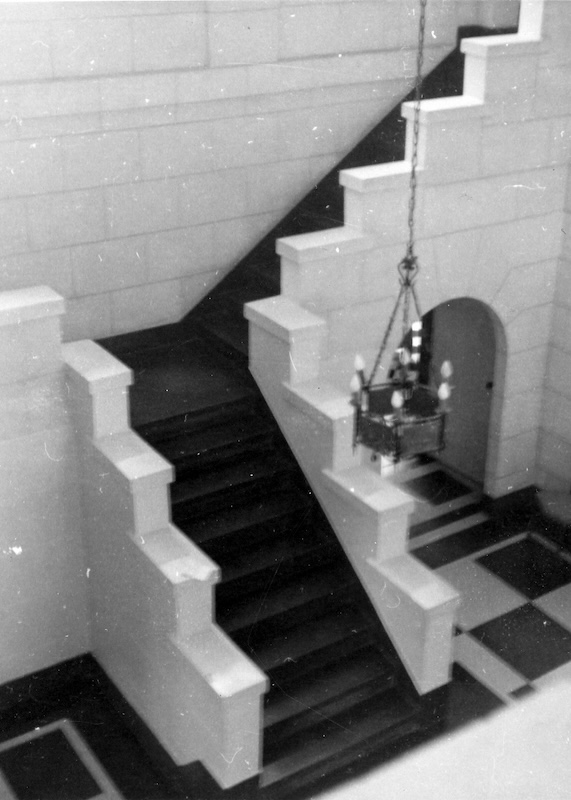
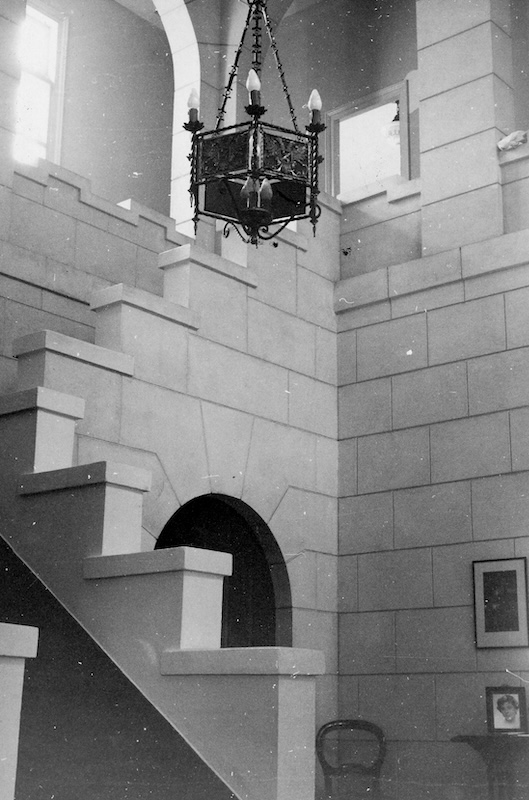
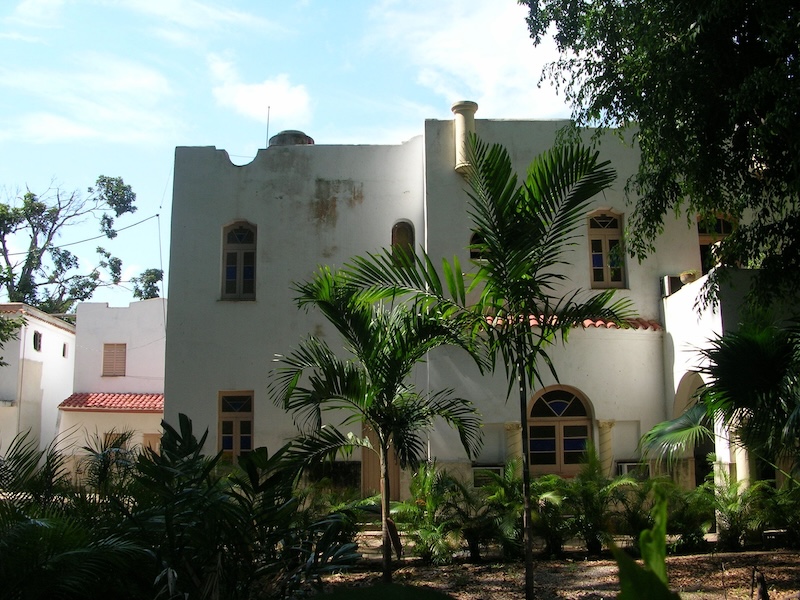
A walkway led around the entire perimeter of the upper floor of the hall. Below are photos of Sandra’s bedroom, at the top of the stairs on the right, and the view of her room from the exterior of the house, on the right side of second floor of the main house.
The building just to the right was the garage, above which were the quarters of the Jamaican cook and Cuban maid.
There was a wall at the edge of the British Embassy residence, across the street from our house, that can be seen through the front doors of our house in the photo at below.
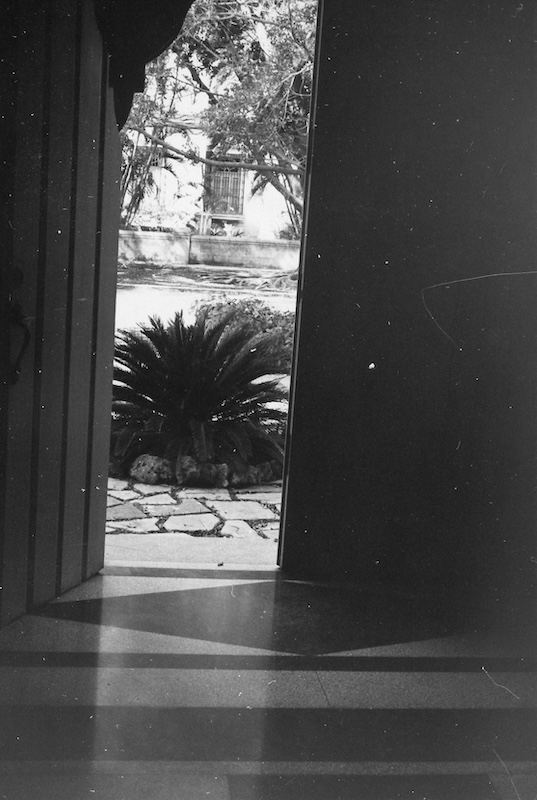
The wall did not stop us from crossing the property and the golf course behind it to get to the Biltmore Club, where we were members.
At the Club stables, Sandra was allowed to feed the horses carrots and took riding lessons there. The stables housed many beautiful horses, including a number that were owned by Batista’s son.
Another horse, a beautiful Argentine mare named Béba, was owned by an American businessman, Edwin Bennett Ogden, Jr. Ogden was born August 26, 1904, in Chattanooga, Tennessee. After completing high school in Natchez, Mississippi, he travelled to Havana, where he joined his family, how had moved to Cuba in 1922. Ed Ogden joined the family business, Ogden & Company, a merchandise brokerage firm specializing in food products from various countries including Spain, in addition to the U.S. In the 1940’s rice became one of the firm’s major products.
In 1960, a year after the Cuban Revolution, Ogden and his family moved back to Natchez, Mississippi, where they continued their merchandise brokerage business and where Ed expanded his interests in cattle farming. As a member of the Republican Party, he frequently participated in local, state, and national campaigns. He was the first Republican elected in Adams County since Reconstruction, as a Commissioner of the County Election Commission. Ogden died in September 1981.
The fifty-three year old (in 1960) Ogden knew our parents. Because he had been thrown by Béba, resulting in the fracture of his collar bone, he didn’t ride her any more, but allowed Sandra to take care of her and, eventually, to ride her. Our mother allowed this, as she herself had ridden at a stable at Sunnyside Beach Park on the Toronto waterfront in the 1920’s.
the stable Sandra was not especially gifted at the formal dressage lessons given by an instructor, who enjoyed showing off. She much preferred the occasional opportunities to ride out in the countryside with a group from the stables, where she could learn to “tune in” to the horse she was riding. She also enjoyed getting dressed up in jobhpurs and riding boots and looking the part of an equestrian!
At the back of our property was a fence, on the far side of which was an empty lot. Giving in to Sandra’s great love of horses, our parents bought a small horse, which was kept in this large yard and in a makeshift stall in the garage. Sandra would cut grass from the back lot for her young cold, whom she named Bruce. Below are photos of Sandra with Bruce and our dog, Tippy.
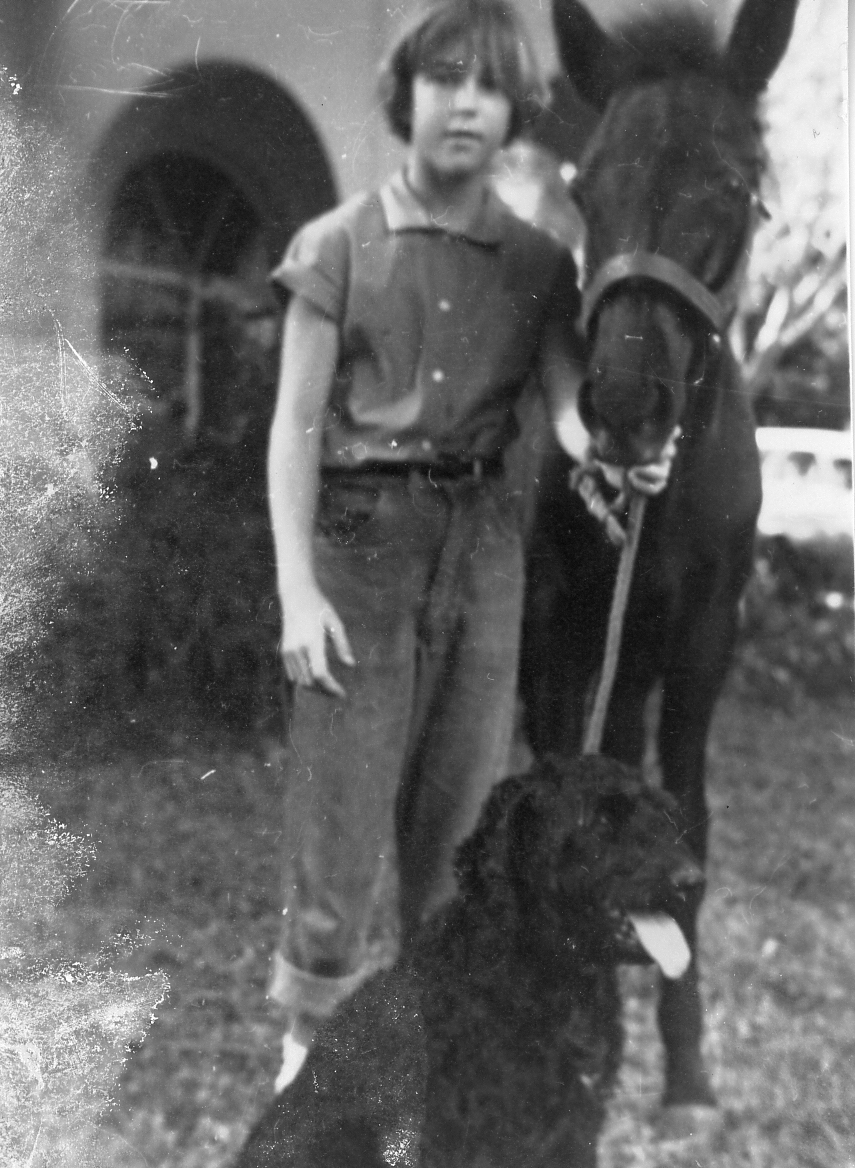
Regrettably, Bruce was too young and too small for Sandra to ride and since he was a colt, it was decided that he should be gelded before he became older. Having witnessed such an event back in Virginia, with friends of Mitzi’s family, Sandra objected strenuously, but to no avail. It was also clear that Sandra lacked the time and skills to train a young horse and that she was more interested in riding a horse than having one as a pet, so the decision was made to give Bruce away to a good home and Sandra would continue to ride at the stables.
Sandra helped David learn to ride a bicycle and a horse. One day, when she was riding Béba and David was riding a smaller horse, both bareback, David’s horse bolted down the street from our house. Sandra was terrified but didn’t chase David’s horse, for fear of causing it to run even faster. David was hanging onto the horse’s mane for dear life, with Sandra yelling instructions after him from behind. Eventually, the horse stopped with David no worse for wear, but for the moments of terror.
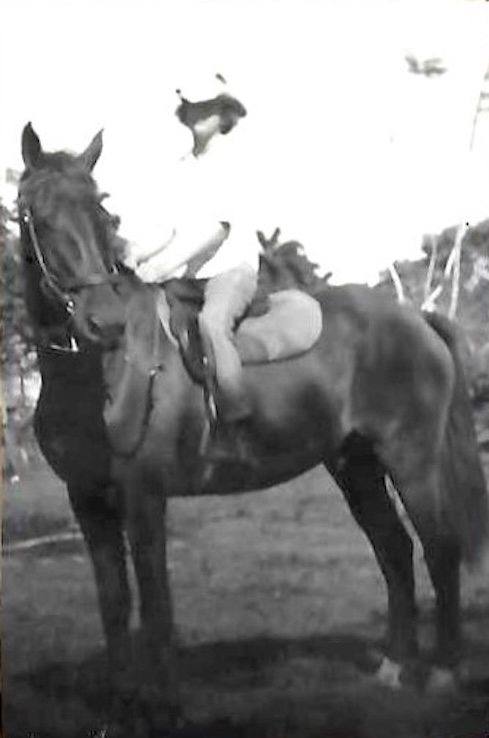
Sandra was invited one time by a school friend to her family’s farm in the Province of Camaguey, in central Cuba, east of Havana. The photo at left was taken on this visit.
Our parents’ bedroom was located on the second story, on the south side of our house. The bedroom had its own adjoining small patio above the portico, which covered the driveway entrance to a first-story porch.
Shortly after the Cuban Revolution, and Fidel Castro’s entry with his army into Havana on January 1, 1959, we peered over the wall of this patio as soldiers from Castro’s army entered the house across 7th Avenue from ours, which had belonged to one of the former President Batista’s officials. We watched as those in the house were brought up and lined up under the street lamp by Castro’s bearded soldiers in fatigues, armed with machine guns, and then loaded into jeeps to be taken away. The house was then sealed with a yellow tape emblazoned with the word, “INTERVENIDO” (“Intervened”) written in bold black letters all along the tape, reminiscent of the tape used to cordon off crime scenes. The poor folks rounded up were likely servants of the former occupants, since almost all higher echelon members of Batista’s regime had fled the island with as many valuables as they could carry as soon as Castro’s victory became apparent.
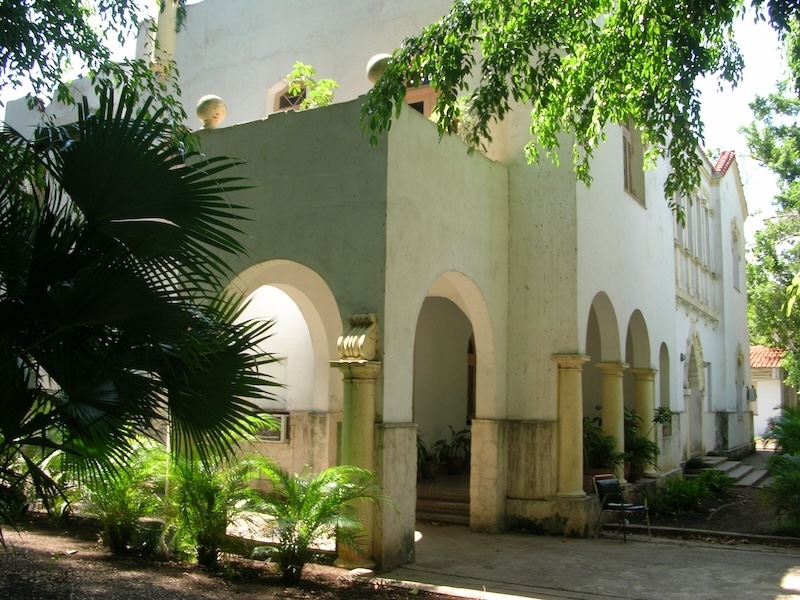
At the rear of the house, shown in the photo below, a door led from the second-floor perimeter corridor onto another balcony, which led by a spiral wrought iron staircase, obscured in the photo by ivy, up to the flat roof one story up that covered my parents’ bedroom, at the front of the house, and my bedroom, at the back. That roof was enclosed by a waist-high wall on three sides, the front, facing 7th Avenue, the side, facing 194th Street, and the back, facing the back yard. Sandra and David used the roof as a place for target practice with a bow and arrows.
Ruston Academy
Sandra and David began attending Ruston in the Fall of 1956, for the 1956 to 57 school year in which Sandra was in grade 7 and David in grade 3. The transfer was a major improvement. Opened in September 1920 by Hiram Hall, a retired English teacher, and his sister Martha Ruston, of Princeton, Indiana, Ruston was by 1955 considered the premiere American school in Latin America, according to an article in Time Magazine.
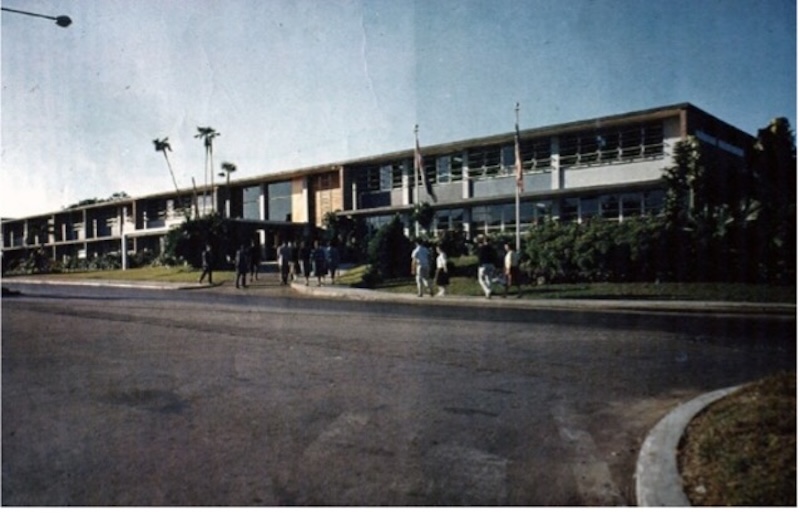
Originally focused on providing an English college-preparatory education for the children of Americans living in Cuba, Ruston soon became a bilingual academy with a multinational student body and an enrollment of 750 students. Mr. Ruston had served as headmaster from 1920 until his death in 1946, after which James Baker took over the school’s administration.
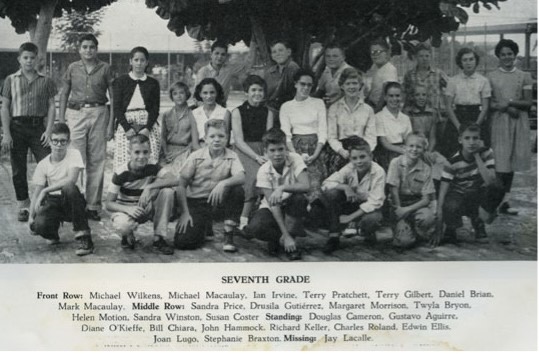
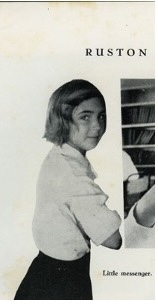
In the photo at left, Sandra is shown in grade 7, in 1956-57, the year she and David began attending Ruston. Pat was then in her senior year, and Bill was in grade 10.
Sandra was an orderly, which meant that she would carry messages from her teacher to the Office, and had free access to the halls.
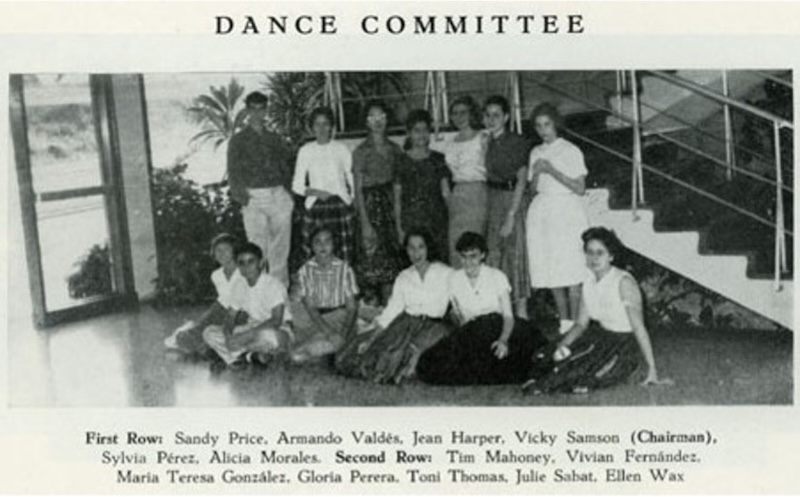
Sandra was also on the Dance Committee at Ruston. In the photo below, she’s seated on the far left.
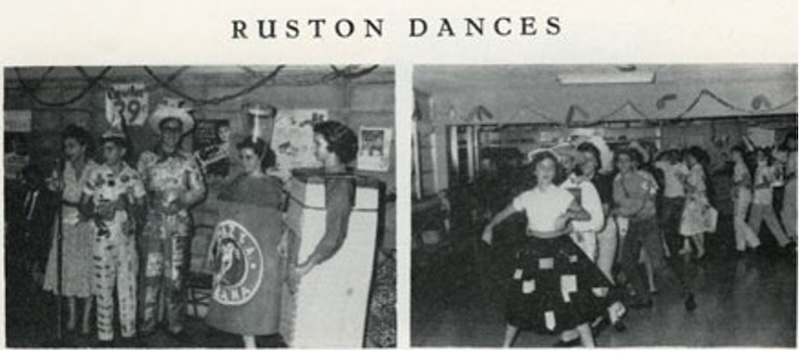
In the photo below, Sandra is leading a line of dancers at one of the Ruston dances.
One of Sandra’s friends, “Kit” Sibert, was a grade behind Sandra in school. Her father was the head of 20th Century Fox in Cuba, and sometimes offered her friends a preview of some of new releases at a private showing. Kit’s sister, Jody, was a year ahead of Sandra and a friend of Bill’s girlfriend, Lynn Wood.
In 1957-58, Bill was a Junior at Ruston, and Sandra was in grade 8. In the photo below, she is seated in the front row, at the far right.
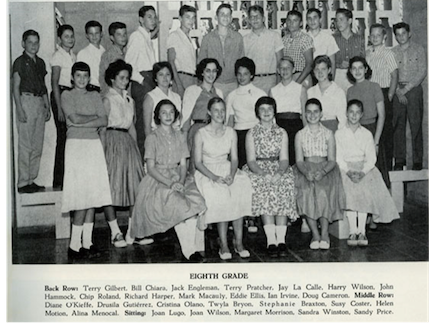
That year, Sandra was in the choir at Ruston.
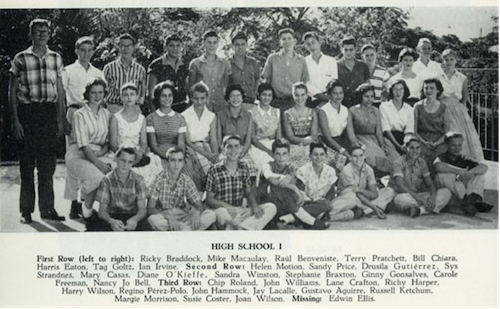
In 1958-59, Bill was a senior at Ruston. Sandra was in grade 9. In the photo below, she is seated second from the left, in the second row.
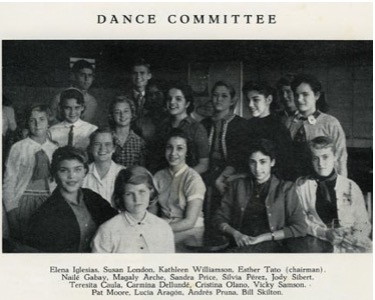
Sandra was again on the school Dance Committee. In the photo below, she is seated in the front row, at the far left.
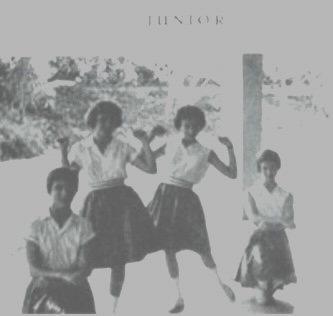
Sandra was also a Junior Cheerleader in 1958-59. She appears in the photo below with her friends, Valerie Copeland, who was in grade 8, and Marie Heath and Jeanie Robie, who were in grade 7. That year, Bill was dating Lynn Wood, who wore her hair in a pixie cut, popular at the time. Sandra emulated this, as appears in the photos below.
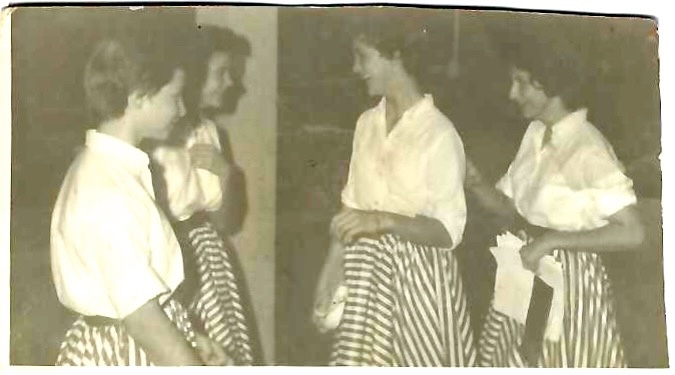
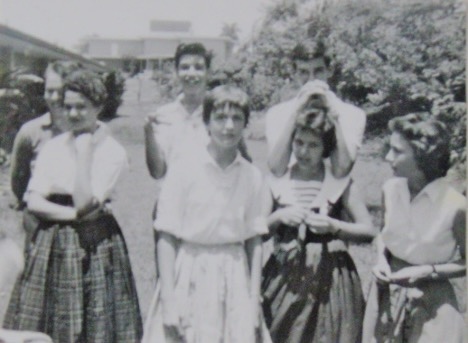
Below, Sandra appears at one of the Ruston dances, leading a dance train.
Bill graduated from Ruston in 1959. In September of 1959, Sandra began grade 10 at Ruston, and David began grade 6. In the photo below, Sandra appears in the back row, third from the right.
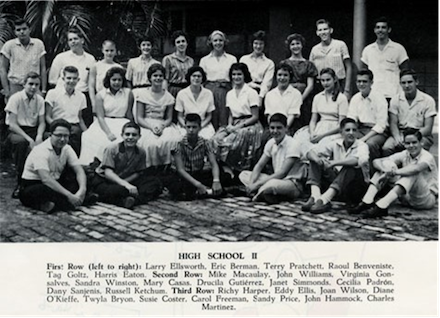
That year, Sandra was again an “orderly”, running messages between her class and the Office. In the photo below, she appears seated in the front row, fourth from the left.
In her paper for Professor Timbres, Sandra wrote of her time in Cuba:
I was young enough to remain in Cuba for the entire five years my parents were there (as did my younger brother). I discovered boys, I rode horses (sometimes alone) out into the country for hours and hours, I had wonderful friends and together we shared and savored the emotional roller coaster of adolescence. I saw other parts of Cuba through field trips or invitations by friends. Once I stayed on a cattle ranch that was owned by the family of a school friend. We rode horses through the sugar cane, we ate exotic food, and we scared each other at night with tales of voodoo rituals. My parents were happy and we children were happy. I didn’t know enough politically to think that such happiness was at the expense of others who were exploited by a dictatorship that was supported by my government. For that period of my life I was innocent of such knowledge.