Sandra's Story - Coral Gables, Florida, (June 1969 to July 1974)
Coral Gables, Florida, June 1969 to July 1974
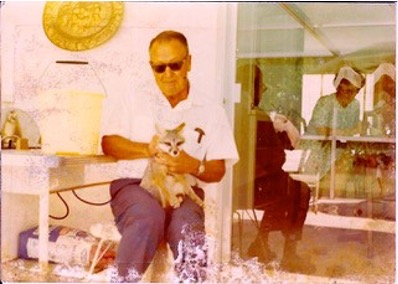
Below, is a photo of our father with Beppy at our parents’ home in Ft. Lauderdale.
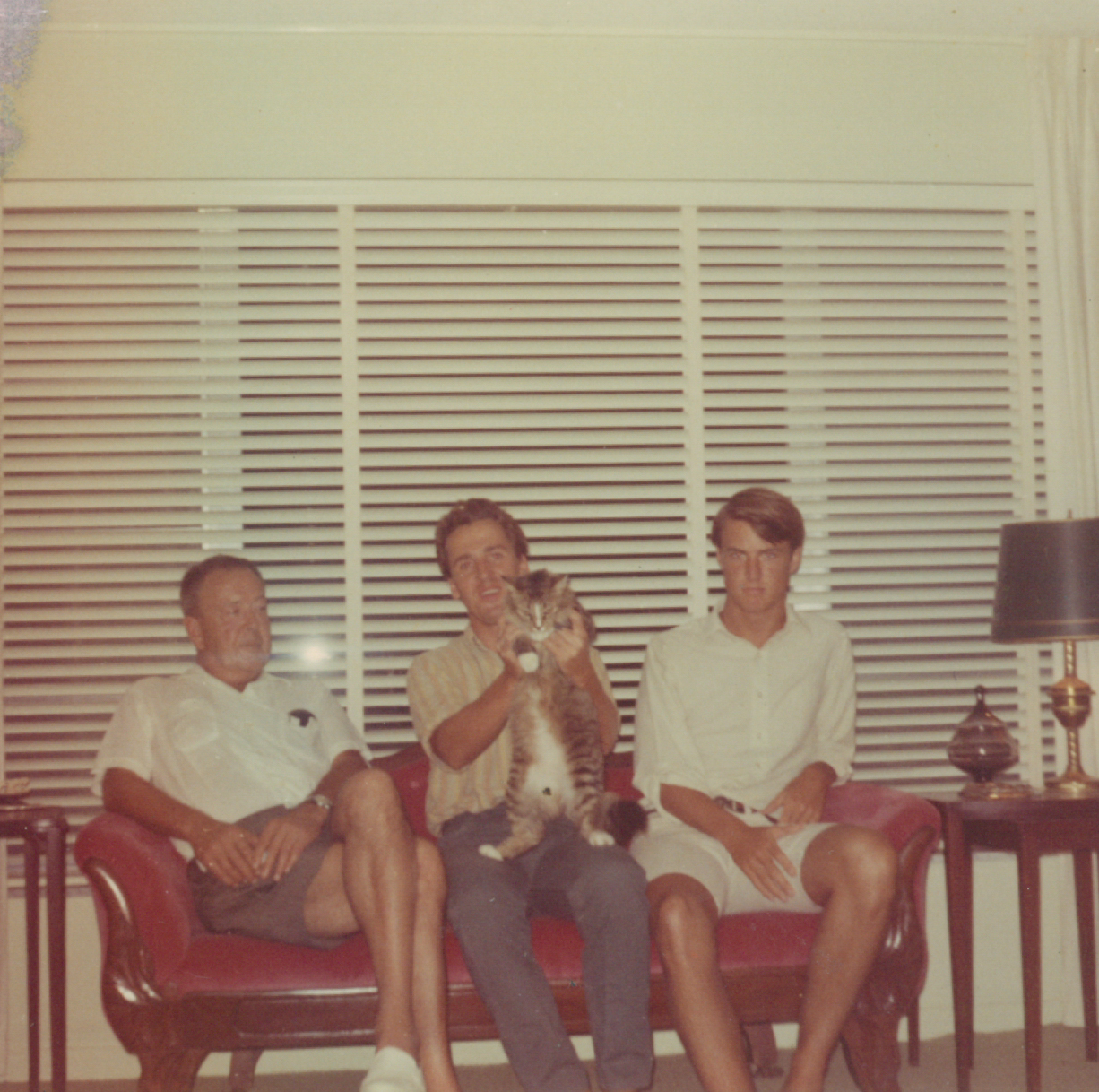
On their return to Florida in June 1969, Sandra and Peter secured an apartment in Coral Gables. David visited Ft. Lauderdale for Christmas in 1969, where the photo below was taken.
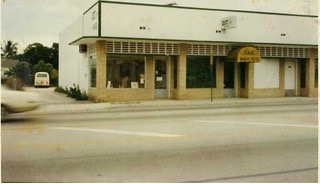
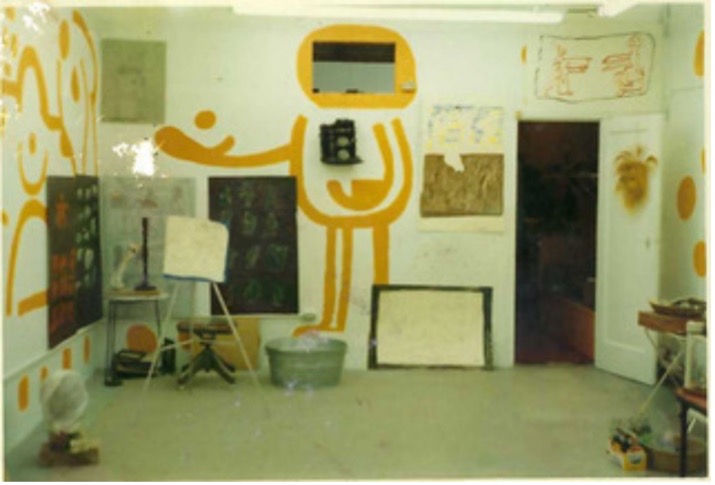
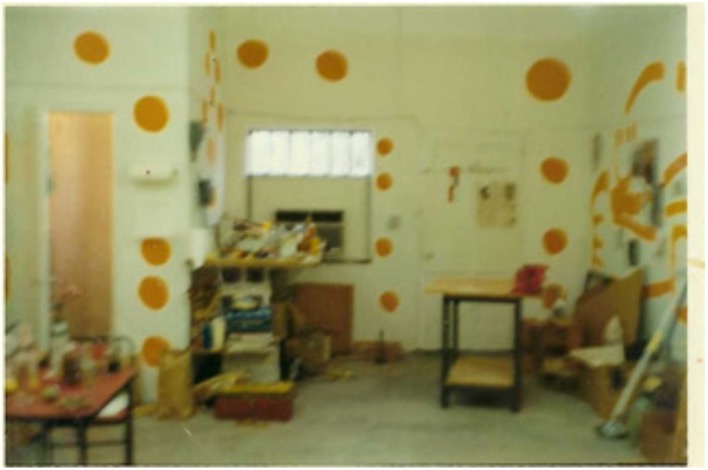
Peter and Sandra owned and managed a tiny storefront art gallery and art school, pictured below, in Coral Gables, Florida.
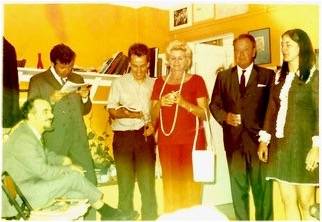
Our mother and father attended the “housewarming of the studio.
Peter and Sandra lived, illegally, at the studio. Peter taught art there and at night, they had a pull-out sofa bed – only a sink and a toilet in a tiny “bathroom.” Sandra ran a hose from the parking lot behind through the window to wash her hair in the sink. As she has noted, it was not comfortable!
To earn income for their household, Sandra found a variety of employment. She worked for a period as a Go-Go dancer at the Wreck Bar, part of the Castaways Restaurant and Night Club in Coral Gables.
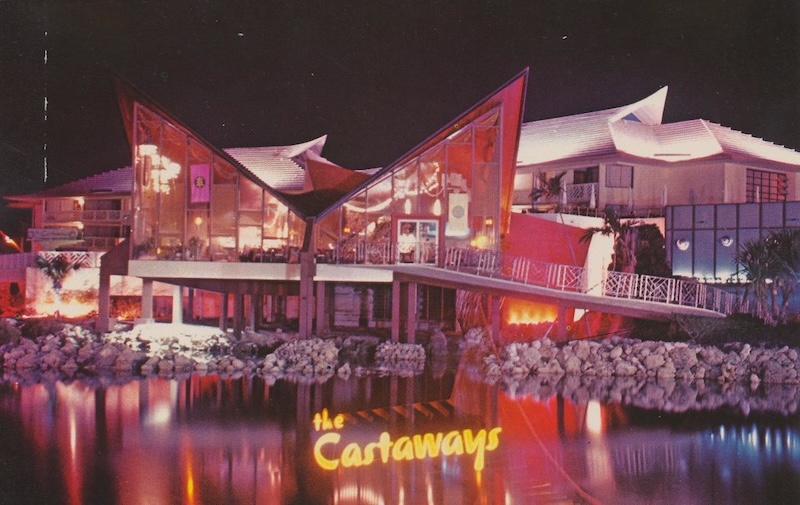
Context: The Castaways resort complex was in the Sunny Isles part of North Miami Beach,. It was advertised as being at “the ocean at 163rd”. In reality, it was on the inland side of a thin land strip, just south of 163rd, occupying a small jetty of land. It opened in 1958 and closed in 1981.
The Castaways had just over 300 guest rooms in a series of buildings with Asian-Polynesian peaked roof details. The main attraction was a dramatic structure designed by Charles Foster McKirahan – a square glass building with a pointed A-frame roof at each corner. The building was elevated on stilts, and each of the four corners held a different bar or lounge: the Wreck Bar, the Tahitian Cocktail Lounge, the Shinto Temple Room, and a coffee shop and indoor swimming pool.
The Wreck Bar, where Sandra worked, was decorated in a sunken galleon theme. Cypress planks covered the walls. Ropes, nets and chains hung from the ceiling. Seven porthole windows behind the bar allowed an underwater view into one of the swimming pools.
Open from 11 a.m. to 5 a.m. daily, the Wreck earned an international reputation as a hot spot where the go-go dancers, dubbed the Wreckettes, danced at 15-minute intervals on large round tabletops under kaleidoscopic lights while live rock and roll music blared from the 5,000 watt sound system. Patrons, who were forbidden to touch the dancers, were given maracas, tiny tambourines, and mallets to make noise. The Wreck always attracted visiting celebrities. The Beatles visited in 1964 and in the spring of 1968, Jimi Hendrix showed up and jammed with Frank Zappa and Arthur Brown. In 1971, the later-to-be pundit, Bill O’Reilly, who was teaching high school English in Miami by day, worked at the Wreck as one of the bar’s bouncers, who were dressed in tuxedos, at night. Sandra drove to the Castaways at night, did her shift, and left. Peter, meanwhile, worked days as a draftsman for a local architectural firm. Sandra eventually quit her job at the Castaways when the management wanted to put together a “show” of some sort, which Sandra had no interest in participating in.
Sandra also worked for a time in the office of a usurious loan agency and insurance office until she was almost 9 months pregnant with Leif Tait Kubina, who was born at Mercy Hospital in Miami on May 25, 1970. Below is a photo of Sandra and Leif at our parents’ home in Ft. Lauderdale.
In November 1970, Sandra was employed at Youth Hall in Miami, the Juvenile Detention Facility for Dade County, housing mostly youths whose charges had not yet been adjudicated. She went to work at the 4:00 a.m. shift.
Context: Construction of Interstate 95 in Florida and declining use of restrictive covenants in the wake of the Civil Rights Act of 1964 had resulted in increasing numbers of lower-income elderly and welfare-dependent families being displaced from the inner city, known as “Overtown”, and migrating to Liberty City, turning the area into a dangerous ghetto, and leading to large-scale flight of middle and higher-income African Americans and others like West Indian Americans, to suburban areas like Florida City and Miami Gardens in southern and northern Dade County, respectively. Crime grew prevalent in the increasingly poverty-stricken area. The ensuing problems of the poor and disenfranchised became most apparent in the race riots that occurred in Liberty City in August 1968 during the Republican National Convention in Miami Beach.
Judge Walter H. Beckham, a graduate of Emery University and Harvard Law School and a judge of the Dade County Juvenile and Domestic Relations Court at Miami, was a pioneer in youth work and was responsible for much of the juvenile legislation on the Florida statutes. Under his leadership, Dade’s Youth Hall was built to remove children from county jail, a child guidance clinic was added to the court staff, juvenile aid bureaus were established in police departments, and new buildings were added to the county home at Kendall. On June 18, 1969, the Board of Commissioners of Dade County, Florida, enacted Ordinance 69-34 entitled:
“An Ordinance authorizing the construction of a new youth hall and juvenile court complex, the issuance at one time or from time to time of not exceeding $7,600,000 special county building certificates of indebtedness for payment of the cost thereof, and the levy of a building tax not exceeding one-fourth of a mill annually for ten consecutive years for the payment of such certificates of indebtedness and the interest thereon.”
Years later, when Sandra applied for admission to a graduate program in social work, she wrote of her experience at the Youth Hall:
Another work experience with adolescents-one which left an indelible impression upon me-was working for six very long months in juvenile hall in Dade County, Florida. This stint, though short, was extremely intense and opened my eyes to many socioeconomic and racial realities of the criminal justice system-realities confirmed and expanded upon in a Psychology and Law class taken here at UCSC.
Peter, for his part, was giving sculpting lessons, working as a draftsman in an architectural firm in Miami, and working on his art.
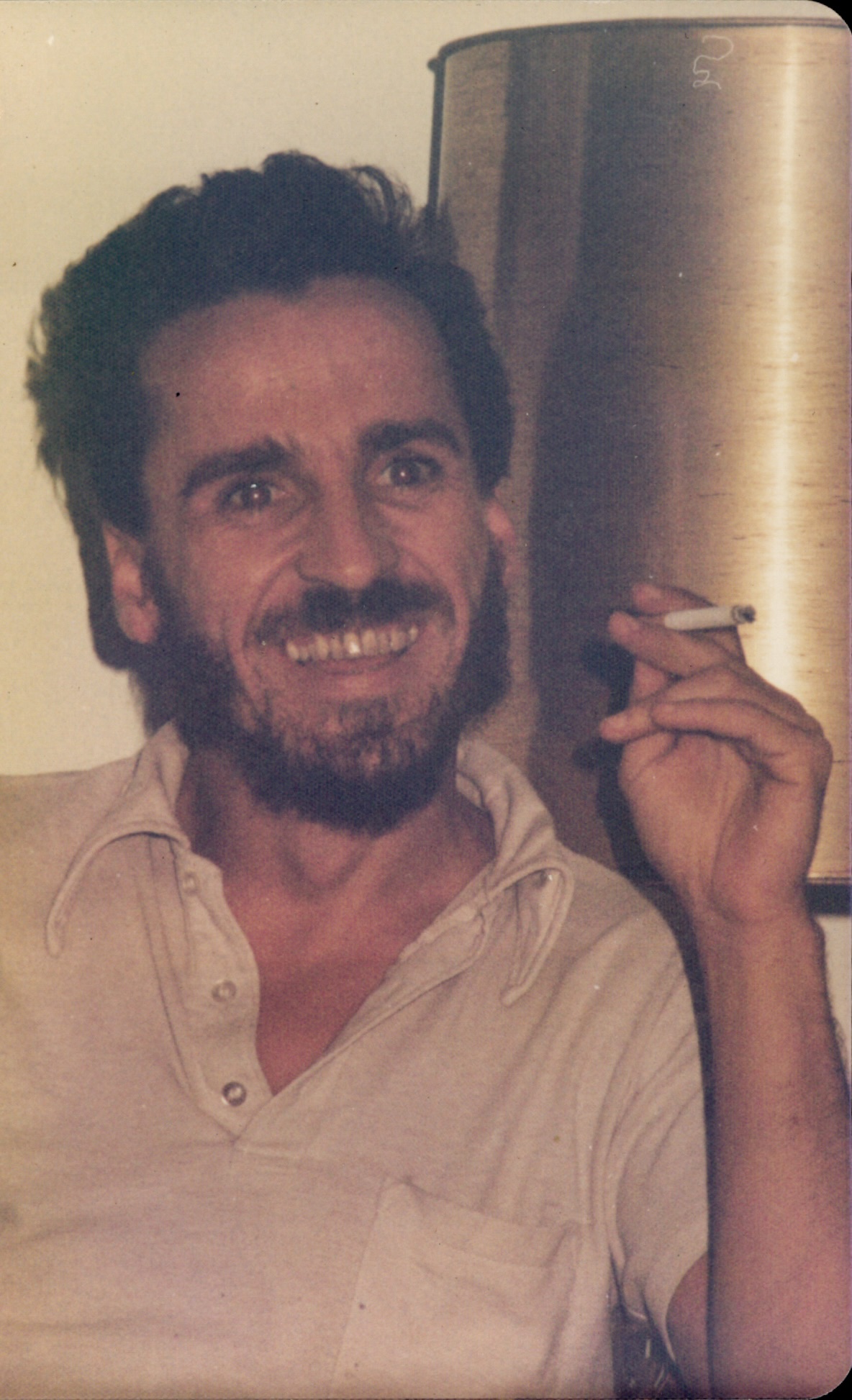
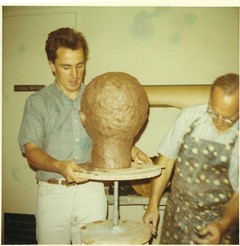
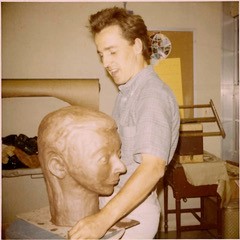
The photos below were taken when an woman artist in Miami who had a disabled son in a wheelchair asked Peter and Sandra to serve as models for photographs she wanted to use for Christmas cards in 1970.
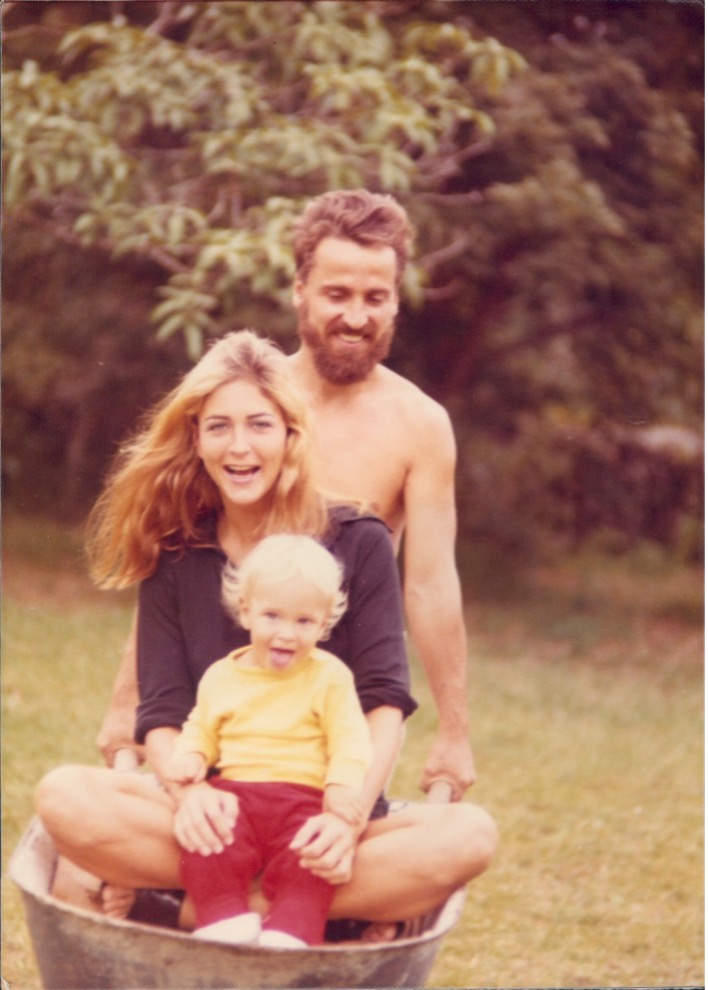
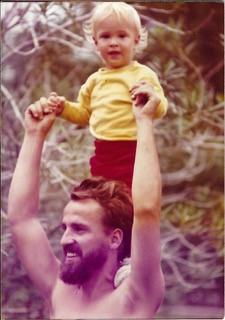
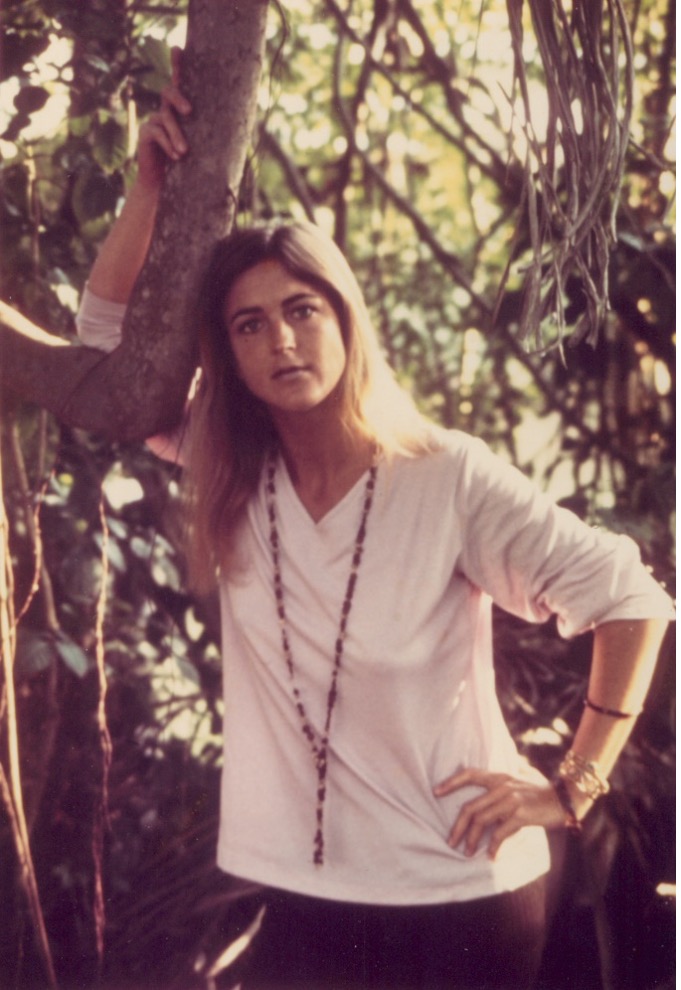
After several years of struggling, each with day and night jobs at differing times, raising their young child, and Peter trying to pursue his art, Peter and Sandra grew apart. Finally, they were divorced on consent on June 28, 1973. Of her marriage to Peter, Sandra later wrote in her paper for Professor Timbres:
After I graduated from high school in Ottawa. I spent a year at an expensive “finishing school” in Boston and refused to go to college. College was the norm in my family and I took every opportunity to rebel against the norms. After a trip across country and a summer working in San Francisco, I changed my mind and returned to the East Coast where I was able to enroll in St. Lawrence University in northern New York State at the last minute because I had high SAT scores. After two years I left to spend a junior year at NYU’s program at the University of Madrid’s Facultad de Filosofia y Letras in Spain. While traveling during Christmas vacation I met my first husband, Peter, on the island of Ibiza. He spoke no English and I spoke no German, so we communicated via a German/English dictionary.
Peter had been adopted by a German couple after the war—his biological father’s name is often found in Czechoslovakia. Peter did not learn he was adopted until he was an adolescent and it was a shocking discovery. He had never felt accepted by his adopted parents. He was, and is, an extremely talented artist We lived in an unfinished house in the countryside of Ibiza, drawing water from a well, using kerosene lamps and a single burner propane stove, having no plumbing and a leaky roof. It was a very bohemian and romantic existence—very late 1960s. We later lived in Mexico. He remains a close friend and designed the house I live in. We had many adventures together, but after the birth of our child, Leif, found that we could not live together. The lifestyle of an artist, as Peter envisioned it, was not compatible with my own programming about how life should be when children were part of a family. We parted amicably.
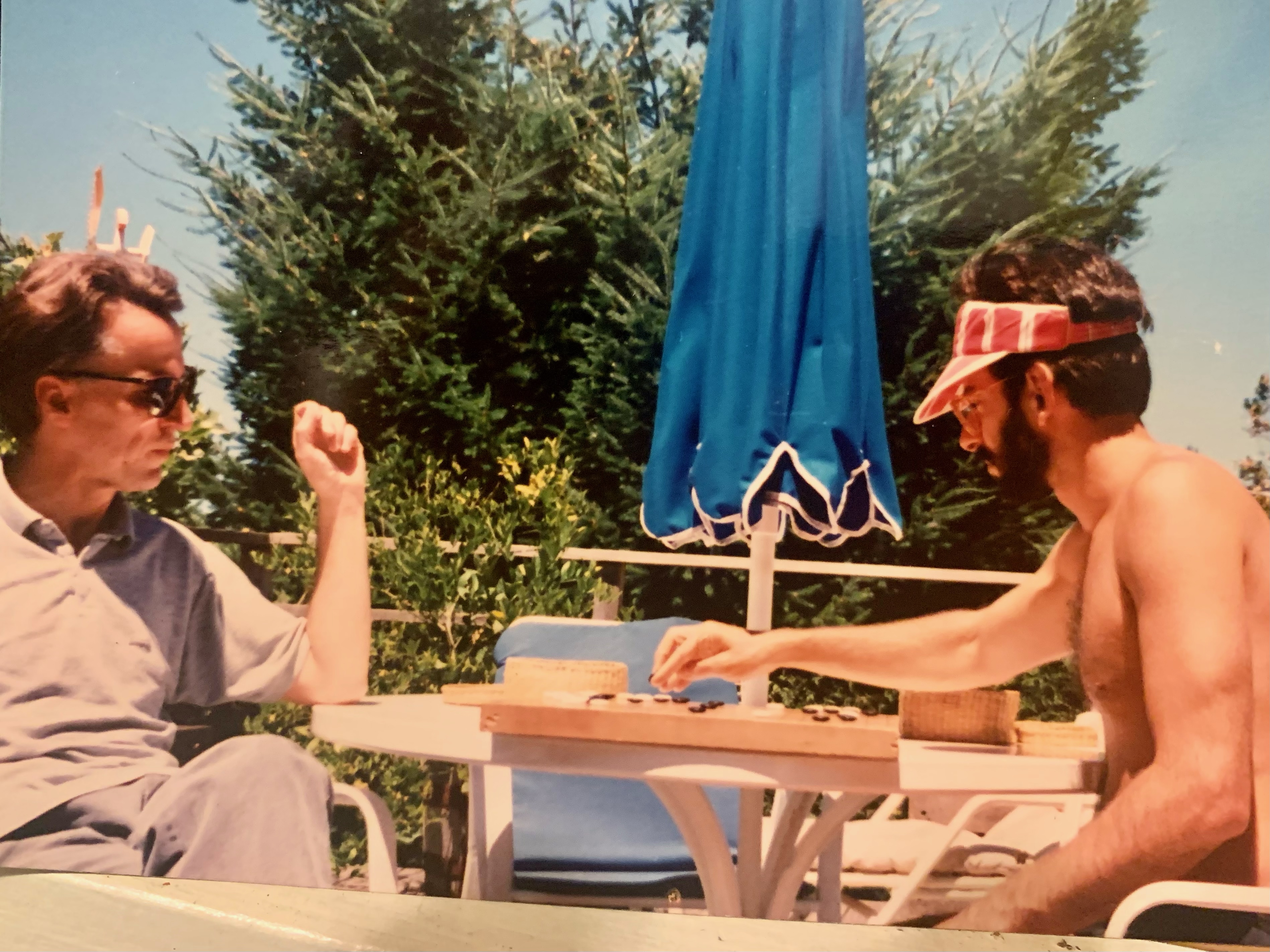
Shortly before they parted, Peter and Sandra met Baba Hari Dass in Coconut Grove at the “Yoga Temple” there. There were two yoga retreats which Baba Hari Dass attended in Florida, one in Homestead and one in Ocala. Peter Kubina’s friend, Scott Shaffer, pictured below playing GO with Peter, told him about Babaji in Coconut Grove in 1973.
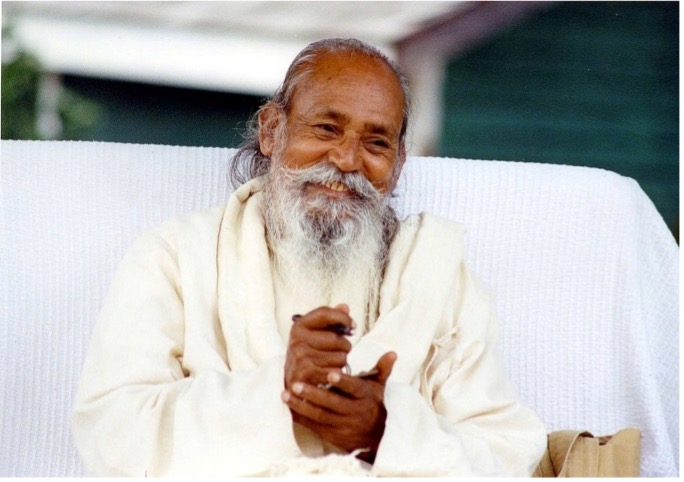
Baba Hari Dass, known affectionately as Babaji to his devotees, became an important influence in Sandra’s life. Babaji appears in the photo below, taken by Pradeepwb, one of his students - Own work, CC BY-SA 4.0, https://commons.wikimedia.org/w/index.php?curid=73688423)At about that time, Sandra met Michael Maura, who was also living in Florida at the time.
Context: Baba Baba Hari Dass was born March 26, 1923, in Almora near Nainital, in Uttarakhand, formerly United Provinces of British India. He left home, with the consent of his mother, at the age of eight and joined an ashram for young yoga practitioners in the jungles of Kumaon. While there, he was introduced into Brahmacharya, meaning complete control of body and mind through ascetic means, including celibacy. He was taught by several itinerant teachers of yoga, including Swami Nityananda Maharaj, who lectured in the area in 1935, and Swami Satyananda Giri of the Dashnami Sanyasi Sect, who visited the Almora region in 1936. In 1936, he also met Ananda Mai Ma, and is said to have experienced her in a trance state of samadhi. He heard a lecture by a pundit who used the Yoga Sutras to interpret her state of consciousness and what level of samadhi she was in. With these influences, Baba Hari Dass adopted yoga as a part of his life.
In 1942, at the age of 19, Baba Hari Dass underwent Sannyasa diksha, a ceremony, performed by his guru, Baba Raghubar Dassji Maharaj, a reclusive sadhu, whom he met in Ramkit Hanuman Temple, in the Almora region. The ceremony initiated him into the Vairagi-Tyagi Vaishnava order of Ramandi Sampradaya, followers of Saint Ramananda, which originated in the 15thcentury. The ceremony, commonly performed by a swami, symbolizes the seven steps of consciousness through which the initiate must pass (good wishes, good thoughts, control over the body and mind, selflessness, realization of the Truth, non-dualism or realization of immortality). The initiate must then internalize those steps through inner purification, selfless service, and spiritual sādhana (practices), finally achieving the seventh state, turīya, meaning liberation and unity with God. In 1952, when he was 25, Baba Hari Dass took a continual vow of silence called mauna (or maunavrata).
From 1950 to 1964 with the help of local followers and volunteers, adults and children, Baba Hari Dass built Ashrams at Hanumangarh and later Kainchi in Nainital. In 1962, after Hanumangarh, and Kenchi (Kainchi) Ashram, he started to build an ashram at Kakrighat where Sombari Maharaj lived, which was later completed on a contract basis. For the next four years, from 1964 to 1968, Baba Hari Dass continued to manage the Kenchi Ashram. During that period, Baba Hari Dass was discovered by several westerners who later referred to him in their writings. In 1964, he was discovered by Bhagavan Das, and in 1967, by Ram Dass, the former Harvard Professor who, with Timothy Leary, was popularizing the use of the hallucinogenic drug LSD. Both noted that Baba Hari Dass had taken a vow of silence years earlier and wrote with a small chalkboard
In 1968, Baba Hari Dass discontinued involvement with Neem Karoli, or Neem Karoli Baba, with whom he had been associated since the mid-1950’s, and for whom he and his associates were managing the affairs of the temples and ashram in Hanumangarh.
Two years later, in 1970, several other westerners who were searching for an advanced yoga teacher in India and had become familiar with Baba Hari Dass’ teaching, spoke to a former professor of theirs, Ruth Horsting. Horsting, formerly Ruth Carolyn Johnson, (later known as Ma Renu), earned her Master of Fine Arts from Northwestern University in 1959, divorced her husband that year, and moved with her three children to California, where she taught sculpture at the University of California at Davis from 1959 to 1971. On February 7, 1971, her 26-year old son, William F. Horsting, died. At about that time, two of her former students proposed to her that they approach Baba Hari Dass in Haridwar and ask him to come to the US to continue his method of silent teaching. At the same time, Paul C. Adams (also known as Prem Das) made the same request. In 1971, Baba Hari Dass accepted the invitation and Ma Renu sponsored his stay for the purpose of teaching yoga. What was initially intended as a short visit turned into a 29-year stay. At the age of 52, Horsting devoted herself fully to the study of Ashtanga Yoga, and became the editor of several of Babaji’s books, including Silence Speaks, Fire Without Fuel, and The Path to Enlightenment is Not a Highway (originally called My Convictions).
In 1976, Baba Hari Dass was given a sum of money by Ma Renu. Babaji said to use the money to start an orphanage in India. He had known a childhood friend who was an orphan and who suffered greatly because of it. Babaji directed Ma Renu in forming Sri Rama Foundation to support Sri Ram Ashram for 50 destitute children located in Shyampur, in Uttarakhand near the pilgrimage city of Haridwar. Jerry Tabachnick (also known as Anand Dass) became one of Baba Hari Dass’ first students of yoga, and in 1970, travelled to India to study with him. He was also active in organizing the Vancouver Satsang in Canada and became a Yoga Sutras commentator and teacher and co-authored Dharma Sara publications on yoga and yoga-related subjects from 1974 to 76.
By February 1971, Baba Hari Dass was teaching in the US. Eight months later, the Lama Foundation, in New Mexico, published Alpert’s (Ram Dass’s) book, Be Here Now (1st edition, Oct 1971).
In 1972, as interest in yoga grew, several events were organized that included demonstrations of yoga asanas, shatkarma, and mudras (Lama Foundation in New Mexico, Coconut Grove in Florida, and Santa Cruz in California).
Baba Hari Dass traveled to Canada during this period and established a Dharmasara community in Toronto, a Salt Spring Centre of yoga, on Salt Spring Island, British Columbia, and a Dharma Sara Satsang, in Vancouver, British Columbia.
Baba Hari Dass started his weekly Yoga Sutras of Patanjali classes at the University of California, at Santa Cruz, CA in 1975. According to Baba Hari Dass, “Yogah means samadhi, or the state that occurs when mental modifications are controlled by persistent practice and dispassion.” Patanjali’s Yoga Sutras define the meaning of yoga as “Control of thought waves in the mind”, or as nirodha (mental control), “by which union (the goal of yoga) is achieved.”
In 1974, the Hanuman Fellowship was created in Santa Cruz, California, employing Baba Hari Dass’ experiences and skills in designing, building and management of the Kainchi and Hanumangarh ashrams in Nainital, India. He advised his followers to write letters to friends, associates, etc., to find a large, open space, in out-of-city surroundings. After a long search, in 1976, one response came from Lois Bateson (wife of the late anthropologist Gregory Bateson), who located a ranger who managed a large property in the Santa Cruz Mountains, that the owner was willing to sell on the condition the new buyers would preserve its natural state. That led to the establishment in 1978 of Mount Madonna Center for Creative Arts in Watsonville, where the large space of mountainous terrain was well-suited for physical work with many volunteers working as karma yogis.
At about the same time, Sandra met Michael Maura, through a mutual friend in Coral Gables, who had leased Peter and Sandra’s apartment there to them.
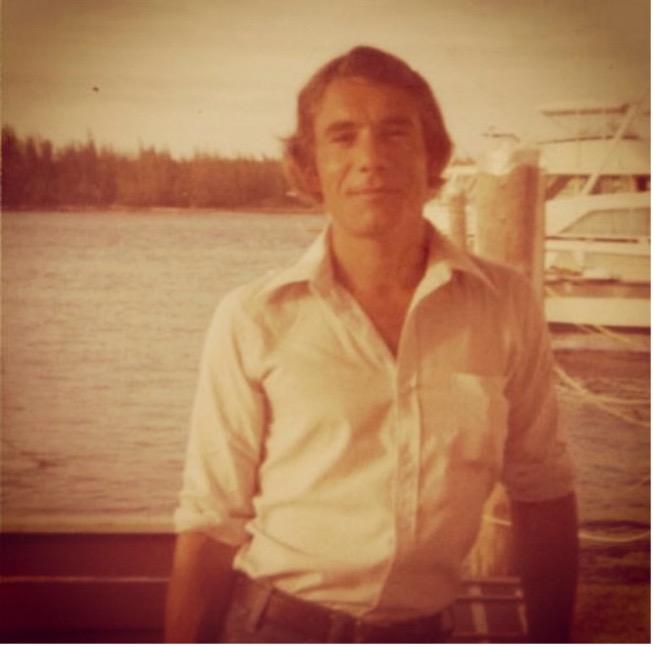
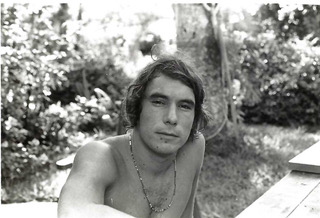
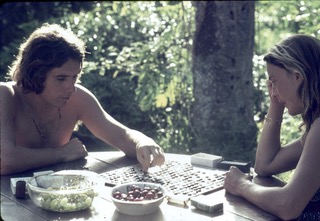
Michael was working for a large American company that had bought out his father’s and uncle’s business in the Bahamas and hired him as their vice president. Michael, Peter and Sandra discussed this emotional situation and arrived at what they felt was the only reasonable resolution.
Sandra married Michael Maura on July 7, 1973. Mike Jr. and Chris, Micheal’s two sons from his first marriage, came to live with them soon after in a large apartment that Michael rented in Coral Gables. No sooner were Mike Jr. and Chris settled and enrolled in school than their mother, Michael’s first wife, Archerita, decided to move to Texas and take them with her. Then, after a fairly short time, she felt overwhelmed and requested that their father come and take them back to Florida. It was a confusing and difficult time for everyone involved and far too short a time for everyone to process all the changes.
To complicate things further, Sandra discovered that she was pregnant. Michael and Sandra decided to give up the corporate lifestyle with the traveling and stress it entailed and move to the Bahamas with their blended family, where Michael would try to buy back the former family business with his cousins. He moved the two older boys to Nassau, and enrolled them in a private school there, enlisting the help of family members to care for them until a move could be arranged for Sandra, Leif and the new baby (Luke) to join them. Michael found a lovely old Bahamian house on Paradise Island that could only be reached by boat or by walking down a long stretch of beach and negotiated to buy back Maura Lumber and Hardware in Nassau from his American employers.
The photos below show Sandra and Michael, after a fishing trip with Michael’s friend, Dennis, who lived in a tiny boathouse on the Tahiti Beach Road property (before it became the mega-millionaire Cocoplum Development) next to the over-garage apartment that Sandra and Peter rented. It was Dennis who introduced Sandra and Michael. The others in the photo were business associates of Michael’s.
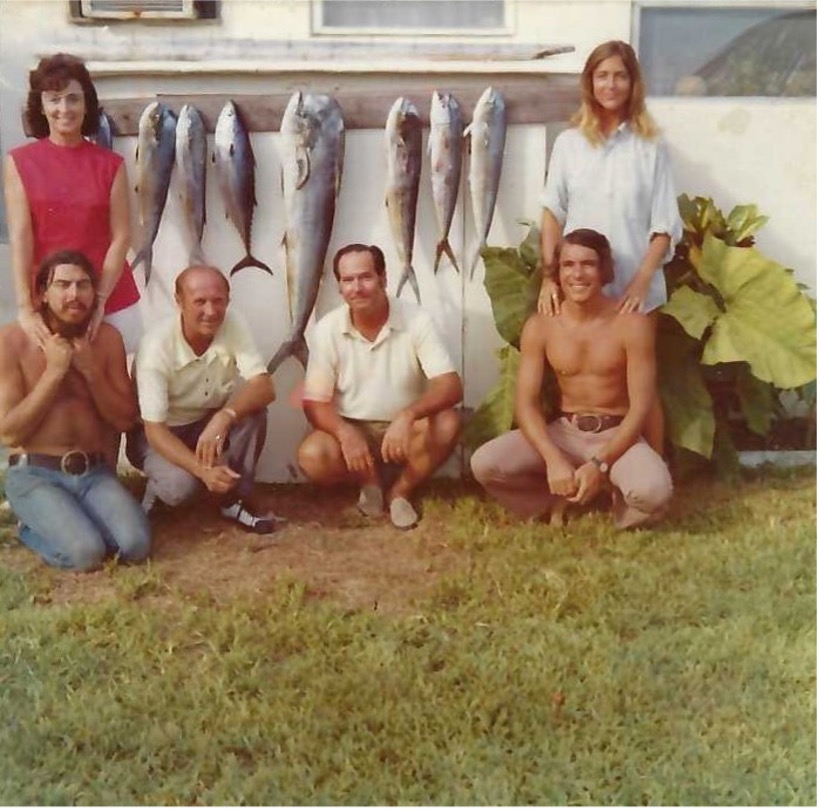
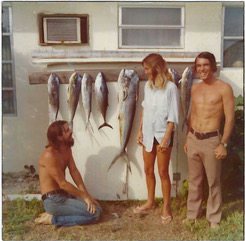
Michael, at 28, had been President of the company for six years. In the early 1930’s, William H.H. Maura, a sponge merchant, bought the lumber and building supplies operation of the local ranch of the Bahamas Cuban Company, located on East Bay Street in Nassau, a short time after a hurricane had destroyed most of Bay Street and the entire sponging fleet in 1929 and a sponge blight shortly afterward finished the industry. By 1945, the business had become Maura Lumber Company. In 1957, William Maura died and passed on the business to his two sons, Montague and John Maura. They continued the expansion that their father had envisaged. By 1958, they had introduced Nassau’s first self-service hardware store and John’s son, Michael, had begun to work in the store, serving in every department except lumber. While still in his teens, Michael went on a trip to sell paint. Within a few years, departments were added that sold marine products, boats and accessories, housewares and toys.
In August 1968, Montague and John Maura retired, and the business was sold to National Building Centres in the U.S. John’s sons, Michael, Donald, and Larry, remained in the business, operating Maura’s for the new owners. In January 1971, Michael, at the age of 26, left Nassau to accept a position as assistant to the president of National Building Centres. After a year, at the age of 27, he decided to try to buy back the company. In 1973, he resigned his position of executive vice-president of NBC, and returned to Nassau to run Maura Lumber Company.