Sandra's Story - Santa Cruz, California, (September 1978 to the present)
Santa Cruz, California, September 1978 to the present
On September 10, 1978, Michael shipped Sandra’s belongings to California. At our dad’s suggestion, I flew to Florida and accompanied Sandra when she flew to the Bahamas for the hearing of her divorce petition in Nassau. While there, we stayed at the home of Sandra’s and Michael’s neighbor and friend, Martica.
Martica was 51 years old when Sandra, who was then 33, and I stayed at her home, a sprawling 10,000 square foot home with several distinct houses. My bedroom was a two story room with an ornate ochre colored barrel-shaped ceiling. Martica was still a beautiful woman, and her still had an exotic life. Her next door neighbor was the English actor, Richard Harris, of “Camelot” and, later, “Harry Potter” fame.
Sandra’s and Michael’s Decree Nisi was issued on December 18, 1979, and their final divorce decree was issued on June 18, 1980. Sandra later wrote of her marriage to Michael:
“Far too soon after Peter and I divorced, I married Michael, a Bahamian businessman with two children from a previous marriage. Michael was charismatic and patriarchal. Peter wanted to be a perpetual child, whereas Michael was very comfortable being the traditional ‘head of household.’ He was wonderful with the children, and for years after we divorced, Leif was invited to visit every Christmas and summer vacation. This closeness ended when Michael remarried, although that marriage also ended in divorce as did a brief fourth marriage. During the time Michael and I were married, we lived on a beautiful island and had the help of a maid, a cook, and a boatman. I learned to drive a boat, since there were no roads to our house. Michael’s family had lived in the Bahamas since the 1700s. It was a glamorous lifestyle, but I had not resolved my relationship with my first husband and Michael and I were both naive about the difficulties facing “blended” families. Michael had two boys from a first marriage who lived with us. A year after we married, I gave birth to my second son, Luke. In retrospect I realize that our relationship never had a chance because of our inability to maturely deal with all the baggage that we each brought to the marriage. As McGoldrick and Carter point out, ‘…remarried families are formed on an entirely different basis than first families, as they are built on the losses of the first family’ (p.169). After five years, we divorced, and I moved to California.”
Sandra moved from Florida to California in August of 1978, and sublet an apartment on Western Drive in Santa Cruz for two months. From September 1978 until September 1982, she lived at 104 Castillion Terrace in Santa Cruz. She later wrote:
“I arrived in Santa Cruz with three suitcases, a four- and an eight-year old, and a one month lease on a sublet. Slowly, I built a new life. I have the greatest empathy for single mothers.
I chose Santa Cruz because I wanted to study with a renunciate monk from India who taught Ashtanga Yoga. After two failed marriages, I was looking for insight and peace in my life. I had been interested in Eastern schools of thought since I first discovered them many years before. As I mentioned, my father read extensively, and encouraged us to educate ourselves as well as pursue formal education. I had read voraciously since I was a child. My older sister always brought her books back from college and from her travels, so they became literary grist for the mill as well. I devoured everything I could find on psychology, trying to understand how the mind worked.
When we lived in Cuba, I had discovered a slender little book in the floor-to-ceiling bookshelves in the library of the house we rented called Indra’s Web; I was particularly intrigued. Later, in college, I took a formal course in Hinduism, Buddhism and Yogic systems. In college I also studied Western philosophy. I particularly liked the Gnostics. St. Lawrence University, where I spent two years, boasted one of the world’s experts on William Blake, and I took classes with him as well. During this time, I played chess avidly, and experimented with various lifestyles.
My first husband shared an interest in Eastern spirituality, and introduced me to a book about an Indian saint who recognized the validity of all the world’s major paths to spiritual awareness, a book which transformed my consciousness. Later, it was also Peter who told me about Baba Harl Dass, the Indian monk who lived in Santa Cruz. I had the good fortune to meet this man and he impressed me deeply with his lifestyle and his wisdom. When my second marriage ended in 1978, I came to Santa Cruz to learn what I could from this man who owns nothing (he is a renunciate) and who never spoke after taking a vow of silence in 1952 until his death 66 years later, in 2018. His spontaneous answers to countless questions were written on small chalkboards or some variation of a writing board. He also answered so many letters that it probably damaged his wrist. His answers were always exactly what the questioner needed at that time.
He could distill the greatest wisdom into a few sentences because his own wisdom was based on a purified mind of complete selflessness, a profound knowledge of human nature, and the intellectual understanding that came from personal experience of highest states of universal consciousness described in all spiritual teachings. He was always present in his awareness and seemed to be aware of everything.
He inspired the founding and growth of Mt. Madonna Center, a unique center for the arts and sciences on 340 redwood-covered acres above the city of Watsonville, overlooking the Pacific coast. The Center also hosts a small school (K through 12) which has no religious affiliation and which focuses on character development as well as academic excellence. Children from this school participate in some form of selfless service as part of their curriculum, helping tutor children in Watsonville, entertaining the elderly in nursing homes, etc. They regularly go on to excellent universities, but perhaps their most telling comment on the school’s success is the fact that many say they want to come back and teach at the school after they graduate from college.”
For eleven years, from November 1981 to January 1992, Sandra was employed as a Health Clerk in a nurse’s office at Branciforte Jr. High School at 2931 Mission Street in Santa Cruz with an enrollment of 500 students. There, her duties were to evaluate and respond to campus medical emergencies and student health needs, to provide liaison between mono-lingual and/or illiterate parents and community resources and school staff, to maintain health records, such as immunization records, to compile a list of major student health problems for staff, and to provide routine first aid and refer students to outside sources of help.
In the fall of 1979, when Luke was 5, (born July 22, 1974), Sandra enrolled him in elementary school in Santa Cruz. Since leaving the Bahamas, Sandra sent Leif and Luke to stay with Michael each summer, in the belief that this would help preserve their relationship with him and would be in their best interests. On August 20, 1980, when Luke was six, Leif climbed up a tree in Michael’s yard on wooden rungs that had been nailed to the tree. Luke followed him, but one of the rungs pulled out of the tree, and Luke fell to the ground, fracturing both bones of his right forearm.
Luke was at first treated by a doctor in Nassau who had been a surgeon for the R.A.F. during World War II. He fitted Luke with a cast, but Luke continued to be in pain, so the doctor removed that cast and replaced it with a second one. These were rigid casts (no longer used because of the risk of a complication known as Volkmann’s Contracture) and the swelling of Luke’s arm due to the initial breaks and the subsequent manipulations during the casting and recasting caused a loss of circulation inside the arm. Prior to flying to Florida to pick Luke up, Sandra arranged with our father for Luke to be flown to Ft. Lauderdale and examined by our father’s cardiologist. The cardiologist examined the x-rays and said that in his opinion, the cast should be removed and the arm re-x-rayed. The doctor in Nassau disagreed, saying the arm had been manipulated too much as it was and removing the cast would “commit Luke to surgery.”
Sandra picked Luke up in Florida and they flew back to California, where they went directly from the San Francisco airport to an orthopedic surgeon, Dr. Niebauer, who had been recommended. Dr. Niebauer concluded that Luke should undergo surgery immediately since Volkmann’s Contracture had indeed set in and had advanced to the point that Luke was in danger of needing to have his arm amputated. The surgery had to be postponed until the following morning because Luke had eaten on the plane, so a general anesthesia was impossible at the time.
The following morning Luke’s arm was opened from hand practically to elbow in an effort to relieve the internalized swelling, which had cut off circulation and caused his fingers to contract into a claw-like position. The necrotic tissue caused by the loss of blood to the tissues also prevented a resetting of the end or growth plates of the radius and ulna bones, a consequence which would irreparably impair the ability of the bones to grow normally. After a fasciotomy (a surgery in which the fascia — band or sheet or compartment of connective tissue, primarily collagen, beneath the skin that attaches to, stabilizes, encloses, and separates muscles and other internal organs — is cut open to relieve swelling and pressure within that compartment, the swollen arm was left open for two weeks. At the end of the two weeks, a skin graft, using skin harvested from his leg, was used to close the large incision site. A flexible split plaster cast was then put on his arm until the graft and the surgery could begin to heal. The final cast was engineered with a series of “stretchers” embedded in it that maintained his fingers in a position designed to counteract the severe contraction of nerves and tendons caused by the lack of circulation.
It required many visits to San Francisco and Luke and Sandra attempted to interject a bit of pleasure into these trips with meals in the hospital cafeteria. Dr. Niebauer gave Luke a rubber acupuncture doll with red and blue meridians embedded in it from his desk because he was so fond of him. When the time came for the cast to be removed, Luke asked Sandra to remove the post-surgical cast, which she did, after getting permission and instructions from the doctor. Luke and I soaked the plaster in a bucket of warm water, until it was soft enough to be removed. His arm was so withered and fragile from all the trauma and casting that Luke couldn’t bring himself to use it immediately. It was bedtime, so we placed his arm on a cushion and carefully carried the cushion and the arm resting on it, like an alien appendage, upstairs to the bed, where it could be supported by pillows so Luke could sleep.
Throughout this ordeal and for months afterward, Luke worked very diligently with a physical therapist to stretch the contracted tendons in his arm, hand and fingers. He wore strange contraptions and did all the exercises and regained a functionality and range of motion beyond anyone’s expectations. In fact, years later, during a consultation at Stanford Hospital, Sandra was advised by an orthopedist that Luke was extremely fortunate that his arm did not have to be amputated, given how long it had been in the initial two casts applied in Nassau. He told Sandra that the expectation normally would have been, if not amputation, that Luke’s arm would have been a “flipper.” He went on to say that one of his patients, in a rigid cast for only two days after a motorcycle accident, had to have his arm amputated, and Luke’s arm had been in rigid casts for at least a week after the injury.
Because no adjustments to the bones was possible during Luke’s initial surgery after the break because of the extent of necrotic tissue caused by the lack of blood circulation to the bone and tissues, the Radius bone in his arm continued to grow, but the Ulna did not, due to the damaged growth plate at its end. The Radius pushed into the space created by this absence of parallel growth, causing Luke’s hand to grow to one side as well. Luke was advised to wait for any corrective surgery until his body (and bones) had reached maximum growth. Luke waited patiently until it was thought that he had finished growing and Sandra asked Bill’s wife, Jane, to find the best arm and hand surgeon she could. Jane did so and came up with the name of a respected specialist in the East Bay: Dr. Tupper’s solution to even up the arm bones was to cut the end (growth plate) off of the radius and insert it into the middle of the ulna and to supported the inserted piece of bone with a metal plate fastened to the ulna with screws. Since there is little blood flow to the Ulna, Luke endured a long 6 months in yet another cast, also using an electric stimulation device to enhance healing.
Because of the surgery, had to postpone a high-school graduation present he had promised himself—a surf trip to Bali. In anticipation of the trip, he had bought 3 new surfboards and asked Peter to paint them with original images, which Peter was happy to do. He loved Luke very much. One of the surfboards had the open jaw of a shark painted on the bottom, a joke both Luke and Peter found funny.
Three days after arriving in Bali, while surfing, Luke caught his fragile arm on a reef and Dr. Tupper’s repair came undone. Luke with a rebroken arm, and carrying his luggage and the three surfboards, waited on standby to catch the earliest flight back to the United States, a testament to both his incredible strength of spirit and to his attachment to his 3 new surfboards. Upon returning to California, Luke took matters into his own hands and found another orthopedic surgeon, Dr. Diao, at San Francisco Hospital. Dr. Diao agreed to do the surgery, and Luke underwent his fourth surgery, which had the best outcome possible.
In the meantime, Sandra continued her association with Mt. Madonna, the community that had developed around Baba Hari Dass. On 23 February 1982, the main program building at Mount Madonna was finished, when a flame from a candle on a puja-table started a fire that burned that building down. In the summer of that year, a new plan was implemented to build a larger program building that could host multi-user activities. Baba Hari Dass developed a three-tier yoga teaching schedule for beginners, intermediate and advanced practitioners. Regular classes in Yoga Sutras, Bhagavad Gita, Satsang events, an annual performance of the Ramayana play, martial arts, sport activities with annual Hanuman Olympics and retreats. He emphasized physical work and volunteer karma yoga services. His aim was that social contact and interaction while working together would support coherent functioning of the multi-purpose facility “where a spiritual aspirant could come to learn yoga and find peace.”
From August 18, 1982, to September 18, 1983, Sandra lived at 660 Nobel Drive, Unit 2-D, in Santa Cruz. With a commitment from Bill to buy a house in Santa Cruz that Sandra could rent from him, Sandra began searching for the best value for the money available from Bill. For fully two years, she searched, always losing out to higher bids.
On November 23, 1983, with encouragement from Babaji, Sandra bought an empty lot in Santa Cruz. The purchase of the property was made possible with proceeds she and Michael gained from the sale of the lease/purchase contract on their Nassau house. With Bill’s loan for construction of a home on the lot and building plans drawn by Peter, who was living in Hayward, Sandra embarked on building a house, the first in her family to do so. The Planning Department in Santa Cruz was notoriously difficult to deal with and it took enormous effort from both Sandra and Peter to obtain the building required building permits. Bill not only put up the construction loan, but was also kind enough to lend his business acumen and oversight with regards to the terms of the contract.
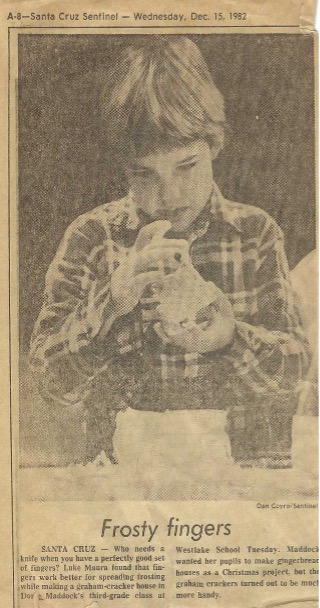
On December 15, 1982, Luke was in grade 3 at Westlake Elementary School in Santa Cruz, when his photo appeared in the local newspaper, below.
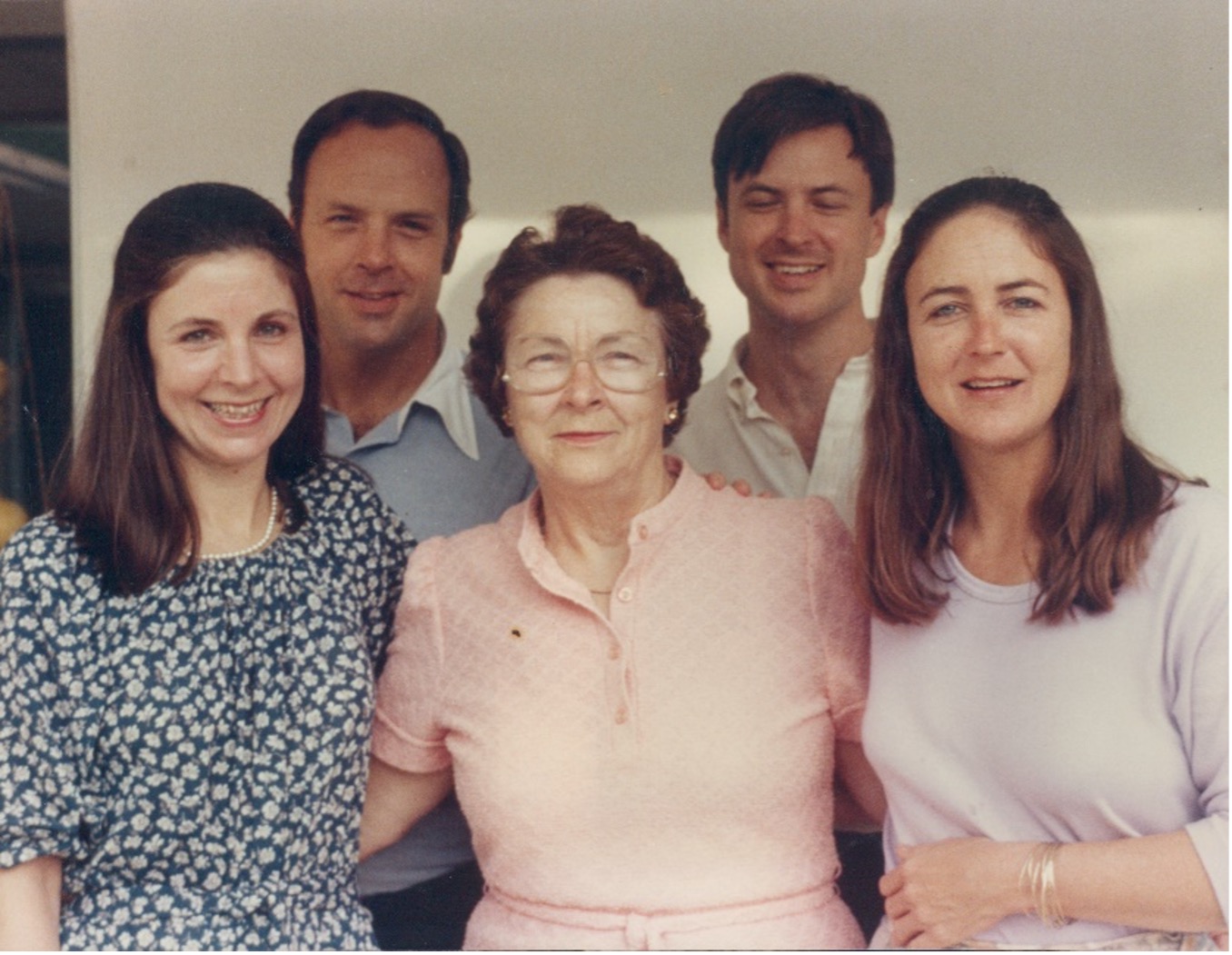
Our father died on Thanksgiving Day, November 24, 1983. Below is a photo of our family in Ft. Lauderdale, after we attended the memorial service for our dad.
Ma Renu, inspired by Baba Hari Dass’ teachings of selfless service (karma yoga), traveled to India in 1984, to launch Sri Ram Ashram, a children’s home, school, and medical clinic in a rural location in the northern state of Uttaranchal.
In the fall of 1984, when Leif was entering grade 9 (his first year of high school), Michael enrolled him at St. Andrew’s College in Aurora, north of Toronto, which Michael had attended and his own sons, Mike and Chris, also attended.
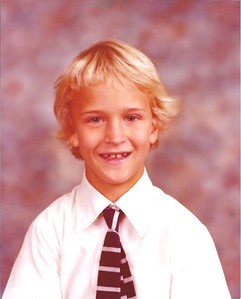
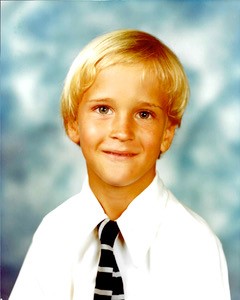
On January 27, 1985, Leif, who was then 14 (born May 25, 1970), and beginning his second semester, fell while skiing on a ski-slope he and his friends had made on the grounds of their school, St. Andrew’s College. He was sent by taxi to a hospital in Toronto, where it was discovered that he fractured several vertebrae in his neck in the fall. He would spend the next six months in hospitals in Toronto.
The staff at St. Andrews, not realizing the seriousness of Leif’s injury, arranged for him to be driven by taxi from the school to be x-rayed. Upon seeing the seriousness of his injury, he was ambulanced to Toronto’s Sick Children’s Hospital and admitted into the Intensive Care Unit, where he was kept prone and in traction to avoid further injury. On February 5, 1985, he was fitted with an orthopedic “halo vest” and neck brace.
The halo, pictured in the illustrations below, encircled Leif’s head and was kept stable by four bolts screwed directly into his skull and attached to a padded plastic vest lined with fleece by four vertical steel bars which precluded any movement of his head.
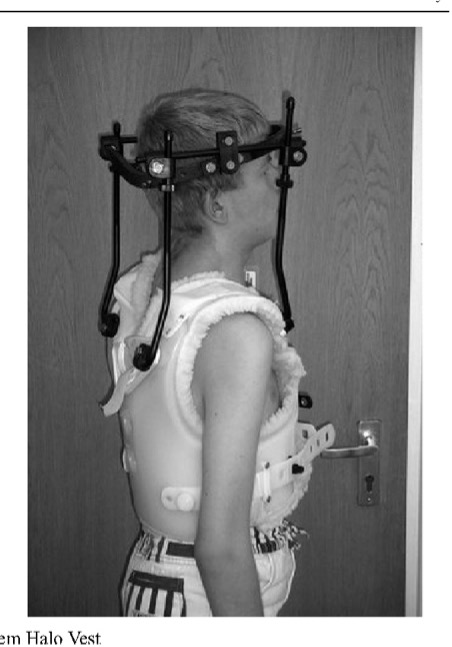
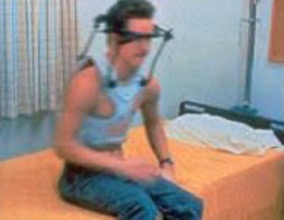
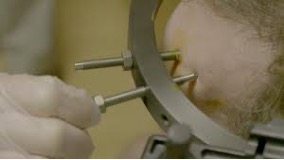
Sandra flew to Toronto to be with Leif at the hospital. She slept on a sofa bed in the living room of David and Maureen’s home in Mississauga and took the Go Train into Toronto to Sick Children’s Hospital where Leif was a patient, and spent the days there with Leif, returning to David and Maureen’s at night. David and Maureen had just had their fourth child, Heather, and lived in a small house, which was crowded. It was also winter in Canada (Leif had broken his neck at St. Andrews on a homemade “ski jump” he and a friend had constructed), and bitter cold. The people at the school in Santa Cruz where Sandra worked in the nurse’s office took up a collection to help her with expenses and held her job for her and our older brother Bill and his then-wife Jane and friends looked after Sandra’s younger son, Luke, while Sandra spent a month in Canada.
While Sandra was in Canada visiting Leif, the house contractor’s wife left him with three children. The contractor, who had been working on Sandra’s house with his wife’s brother, began drinking heavily and left Sandra’s house unfinished to begin another job. When Sandra returned to Santa Cruz, leaving Leif in the hospital in Toronto, the lease on her rental had long expired, so she had to finish the construction job she knew nothing about, and had to return to work and to being a single parent. There were many nights, she said, when she sat and wept, for her children, for the dream house that might never be completed, for the loss of money that Bill had invested, and for the seemingly impossible demands on her physical and emotional energy. She kept her job, though, and completed the house construction by doing the sub-contracting herself, and to her great relief, both of her beloved sons survived.
Leif endured the halo device for two months, without ever being able to remove it, even to bathe. On February 11, a week after he was fitted with the halo, he contracted Chicken Pox, with blisters in his mouth and all over his body inside the fleece lining of the suit of padded armor that encased his torso. At the end of two months, on February 27, 1985, Leif’s doctors determined that the halo had not been successful in stabilizing his injury and strongly recommended a spinal fusion of several neck vertebrae. Leif was then transferred to the Hugh MacMillan Rehabilitation Centre near the Sunnybrook Health Centre in Toronto for physiotherapy, where he was visited weekly by David and Maureen, who drove into Toronto from their home in Mississauga.
Sandra flew back from Toronto to Santa Cruz on March 2, 1985, to resume her employment and to continue the work building her house that the contractor had left unfinished.
On April 12, 1985, Leif’s halo device was removed and he was fitted with a “somi” brace. Leif returned to Sick Children’s Hospital the following week, on April 18, 1985.
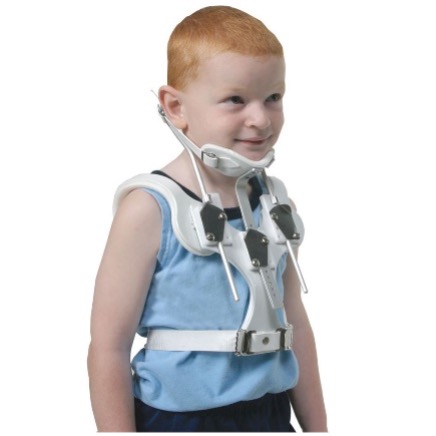
On April 19, 1985, Sandra left her friend Devaki and her children to care for Luke at her home in Santa Cruz, and flew back to Toronto, where she stayed with David and Maureen from April 19 to 29, sleeping at the Ronald MacDonald House near the hospital and at David and Maureen’s home, commuting once again into Toronto on the Go Train. On April 24, 1985, Leif underwent surgery to fuse several of his spinal vertebrae with bone harvested from his hip and wired onto his spine. Following his surgery, he was transferred back to the Hugh MacMillan Rehabilitation Hospital on May 1, 1985 until his eventual discharge on June 21, 1985.
In May 1985, Sandra and Luke moved into Sandra’s newly constructed house. The house, at 103 Wavecrest Avenue, sat at the juncture of two roads, Alamo Avenue and Wavecrest Avenue. Sandra was offered a choice between these two streets as the address for her new home and chose Wavecrest over Alamo.
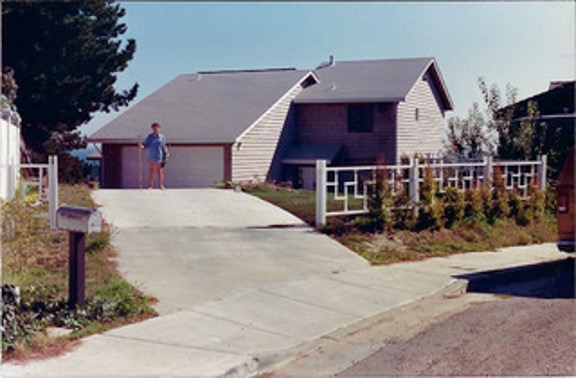
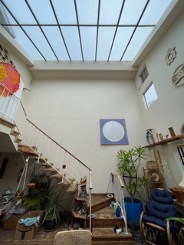
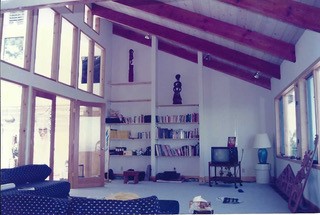
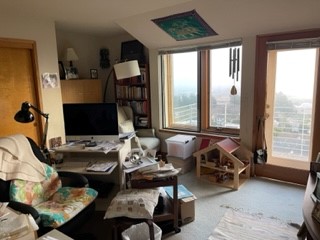
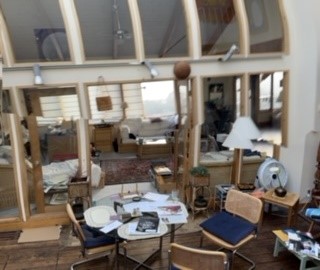
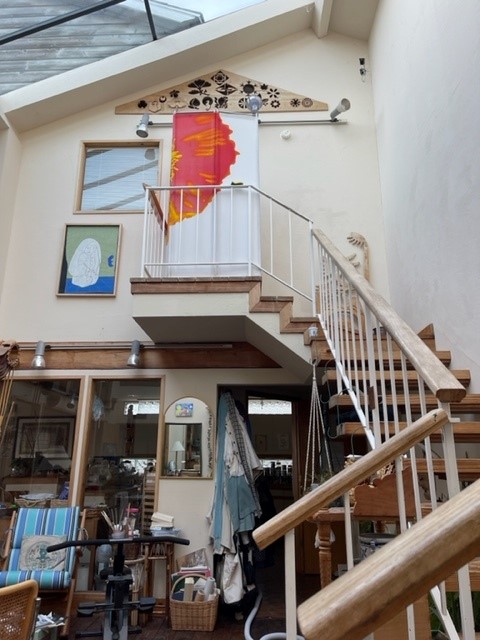
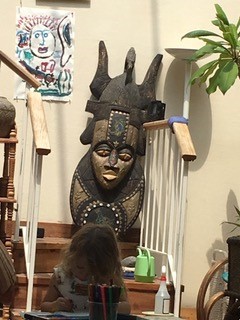
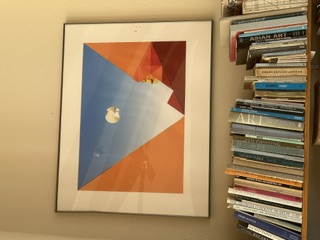
The house in Santa Cruz eventually became a home for Peter’s art.
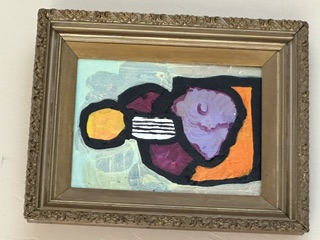
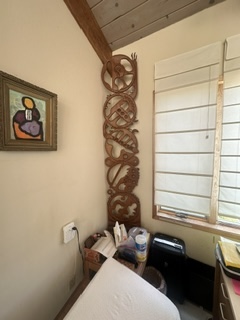
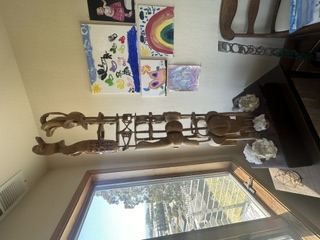
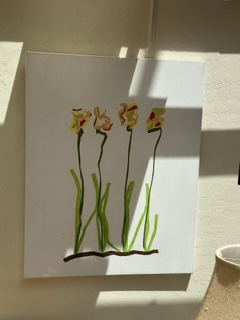
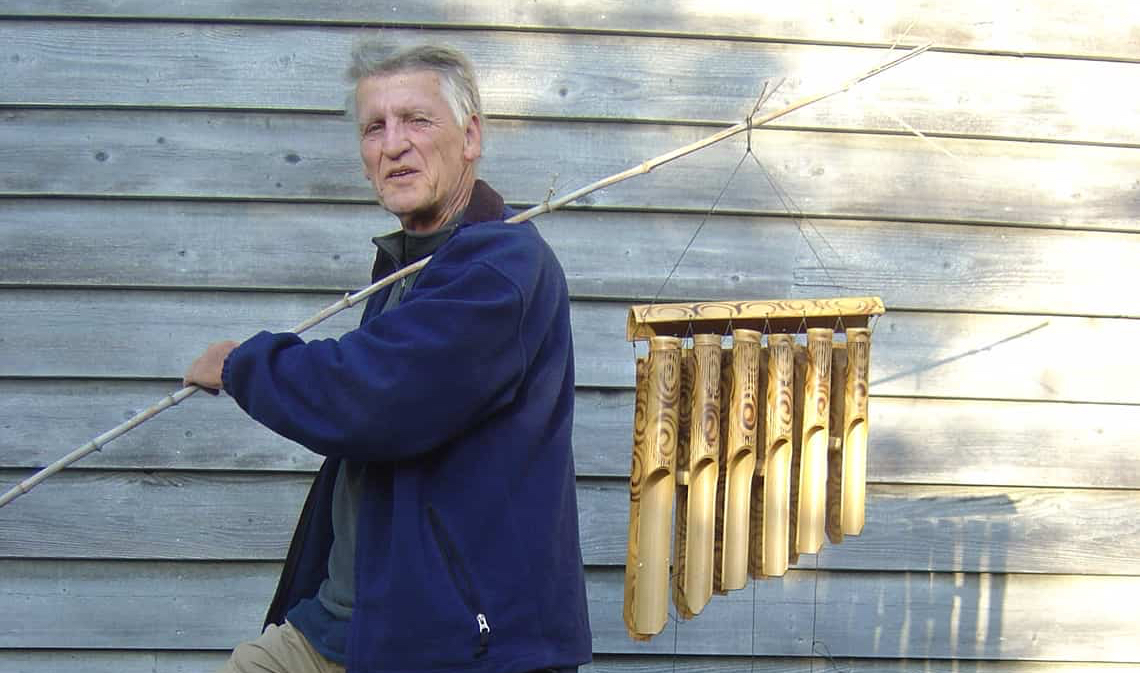
The following month, on June 21, 1985, Leif was discharged from the Hugh McMillan Rehab Hospital in Toronto. Peter travelled to Toronto to pick Leif up and returned with him on June 25 to Santa Cruz. Leif left San Jose, where Peter was living, on August 1, 1985, but returned on August 14, 1985.
The Sri Ram Ashram, now located in Shyampur village near Haridwar, was established in 1987. Its focus was to support orphaned and destitute children, some of whom were brought and left at the entrance gate, or were found abandoned in streets of towns, rural places, or the jungle. After medical evaluation those children are brought into the Ashram. In 1987, Sri Ram Vidya Mandir, a large school next door to the orphanage and built with donations, became a nationally accredited school, which educates children, from Nursery through 12th grade, from both the orphanage and nearby villages.
Around Baba Hari Dass’ ideas of inter-connected yoga-related activities, a project similar to the ones at Mount Madonna in Santa Cruz and at the Salt Spring Centre of yoga, established in 1974 in Vancouver, B.C. in Canada, was created at the Pacific Cultural Center in Santa Cruz, in 1989.
Sandra was issued a Real Estate License by the State of California on October 25, 1985, but never practiced as a real estate agent.
Leif completed grade 9 while still enrolled at St. Andrews but living in the Hugh MacMillan Rehabilitation Hospital. After returning to Santa Cruz, he completed 10th grade at Santa Cruz High School. Sandra, with Michael’s support, wrote a letter to St. Andrews College on February 4, 1986, asking for him to be re-admitted, and the school agreed. Leif returned to St. Andrews for grade 11.
On October 4, 1988, the University of California at Santa Cruz admitted Sandra for the winter quarter of 1989. Some classes had transferred from St. Lawrence, but she first had to complete a missing math requirement at Cabrillo College, the local community college.
Leif transferred to Santa Cruz High School for his senior year, and graduated from that school in May 1989, although he was under the impression at the time that he had failed to complete one of his courses, and so did not attend his graduation ceremony with his class. That fall, Sandra began her undergraduate studies in psychology at UCSC as a junior. Three years later, in May 1991, Sandra’s youngest son, Luke, also graduated from Santa Cruz High School.
That summer of 1989, Luke underwent further surgery on his hand, which had earlier been postponed until his hand stopped growing. The doctor performed the surgery, cutting the growth end of the radius bone of Luke’s forearm and installing a pin and plate in his ulna. When his cast was removed, Luke travelled to Bali to surf with three surf boards that Peter had painted for him, including one with the image of a large open shark jaw on the underside, as if coming up from the depths. Peter and Luke found this funny; Sandra only a little funny. On his third day in Bali, Luke caught his injured arm on a coral reef and broke it again, cutting short his vacation. Without a return ticket, and unwilling to give up his surf boards, Luke boarded a plane on standby and returned to San Francisco, where he underwent further surgery.
In the fall of 1991, Luke entered Colorado State University where he spent a semester before transferring to the University of California at Santa Cruz.
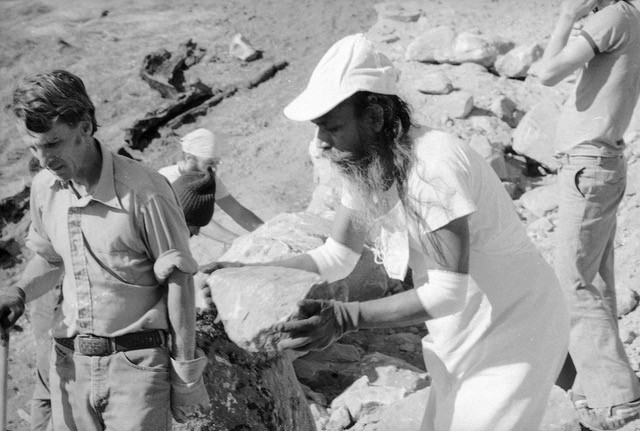
Peter continued to spend time at Mt. Madona, helping to build the school and yoga centre there. In the photo below, he is pictured with Babaji.
In January 1992, with Luke now in university, Sandra quit her job at the Branciforte Junior High School and returned to school full-time as a re-entry student at the University of California at Santa Cruz. In her application to the program at UCSC, Sandra wrote of her experience raising her children:
… I have raised two children of my own (ages 19 and 23) and was stepmother to two additional children for five years. As a mother and stepmother, I have experienced child-raising in a traditional family structure, in a “blended” family, and as a single parent. I have volunteered in my children’s schools and in their extracurricular activities. Like most parents, during all this time, I have been the naive scientist-observing, making mistakes, experimenting …always learning….
Because I believe that there is no more important priority in any society than the well being of children, I hope to integrate my goal of becoming a child psychologist with a larger, overarching goal. This larger goal was articulated by my teacher of Ashtanga Yoga, whose life exemplifies his teachings. When asked if there is a universal duty for all human beings, his response was: “Yes. To attain peace, to create peace, to dwell in peace.”
For a course on child psychology, she worked with a severely emotionally and behaviorally nine-year old girl. Her Professor, Donald Saposnek, noted that Sandra showed strong insight and understanding of the child. He wrote, “Her term paper was outstanding. It was extraordinarily comprehensive, well-documented, integrative, analytic, and seasoned well by honest, soul-searching self-reflection.” Another professor, D.M. Harrington, gave the following evaluation of the paper Sandra had submitted for a course on Human Personality:
Sandra wrote a term paper exploring Hinduism and its assumptions abouthuman personality and how these relate to western personality theories. Her paper showed a level of effort well beyond that expected for this assignment. The paper was very thoroughly researched and synthesizeda tremendous wealth of information. In addition, many interesting and insightful connections to course ideas are drawn out. An OUTSTANDING piece of work!
On June 18, 1993, Sandra graduated with honors in her major, psychology, and received her B.A. (Psych) at U.C.S.C. As a graduation gift, Bill gave Sandra a ticket for a return flight to India. In her application to graduate school at San Jose State University, Sandra wrote:
Before actually beginning graduate school, I hope to spend three months in the Sri Ram Orphanage in Haridwar, India. My plan is towork in this orphanage and do some informal research there as well. I am extremely interested in the cross-cultural aspects of child psychology and feel that I can learn a great deal from observing how other cultures deal with human problems. Incorporating an anthropological dimension will hopefully broaden my perspective.
When I return from India, I plan to become a volunteer for the Santa Cruz CASA program (being an advocate for children who have become wards of the court), and hope that I can incorporate this work into a graduate school field practicum. I am just completing a practicum at UCSC which involved spending time with an identified “emotionally disturbed” third grader at a local elementary school and it has been an extremely valuable experience.
One of Sandra’s Professors, in a letter of reference he wrote on June 23, 1993, in support of her application for graduate studies, noted that only 15% of the students at UCSC earned honors in their program. He observed that the overwhelming majority of her psychology professors had summarized her performance in their courses as “Excellent” or better and had often described her academic work as “outstanding”. He added that “At the inter-personal level, Sandra strikes one as a very intelligent, articulate, perceptive, mature, cheerful, and well-grounded woman. Sandra has a quietly self-assured and utterly un-defensive manner which makes interactions comfortable and productive.”
In October 1993, Sandra formally applied to San Jose State University for admission into its Master of Social Work program. She submitted a letter of reference from Donald Saposnek, PhD. Saposnek had been a clinical child psychologist and family therapist since 1971, a trainer and consultant in child psychology and mediation since 1977, and had published several books, including Mediating Child Custody Disputes, in 1984. He was director of family court services in Santa Cruz County for 17 years and has since served as the Editor in Chief of the Academy of Professional Family Mediators. He taught Sandra Childhood Psychopathology and Practicum in Child Psychology at U.C.S.C. On October 28, 1993, he wrote:
Sandra is a very bright, perceptive, and sensitive student of psychology. Her analytic skills have been widely recognized by her various professors, and she has shown skill in both research methods and in clinical areas.
She has a wide range of life experiences which she is nicety able to bring to her academic conceptual work. Moreover, her clinical sensitivity, compassion about people, and deep commitment to better the human condition, combined with her academic strength, make for a powerful package in graduate pursuit in psychology.
In my Childhood Psychopathology class, Sandra’s performance was excellent. However, in my Practicum in Child Psychology, her final paper was an outstanding, extraordinarily thorough, integrative, analytic, honest, soul-searching, self-reflective and poetic exploration of the child with whom she worked for the quarter. It truly was a most impressive paper. It showed of what Sandra is capable when focused on an area of her stronginterest.
Sandra has already explored a considerable amount of self-study, reflection, and pursuit about human dynamics. As such, she is well ahead of the average student entering graduate studies. I believe that, with her intelligence and strong motivation, she will do quite well in graduate work. Hence, I strongly recommend her to your program·.
From July to October 1993, Sandra packed up our mother’s belongings in Ft. Lauderdale and moved it to California. The sale of our mother’s house closed on October 8, 1993, for $135,000.00, after which our mother moved to California. Our mother was then 79.
When Mom arrived in California, she lived at Dominican Oaks for two years, from 1993 to 1995.
Mom remained at Sandra’s home for five years, until she moved to Dominican Oaks on October 31, 1998.
In her paper for Professor Timbres Sandra wrote:
Two years ago, I moved my mother in with me. She is 81 and almost completely deaf. My younger son, who is working at becoming independent (“launching himself’), found it difficult sharing a house with both a mother and a grandmother. I can’t really say I blame him. He’s just moved out, so I’m hoping he’s launched himself into his own orbit. I am close to all members of my family. They’re all good people, including my mother. It is interesting to watch the aging process. Birth and death are two ends of a rope. One can’t have birth without also having death, so intellectually, at least, I accept its inevitability. What is interesting is how we always imagine others dying, but rarely do we really believe we will die, also. In our minds eye, we continue to exist. We fear losing this reality.